
Sailing since 2010 Started with Laser 16, followed by Beneteau 211, Beneteau 260 Now sailing Sipadan, a Hunter Legend 36
Gareth Higgins & Eabha Higgins
20 September 2025 at 08:23

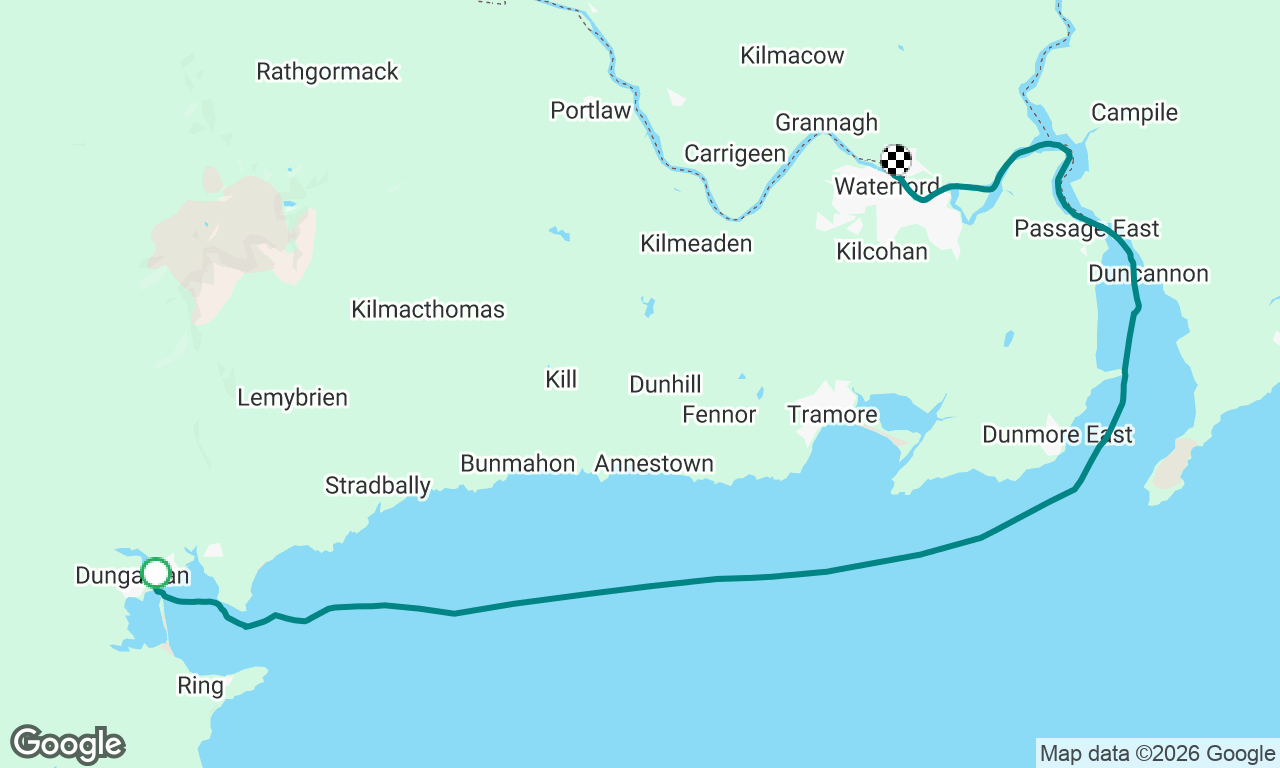
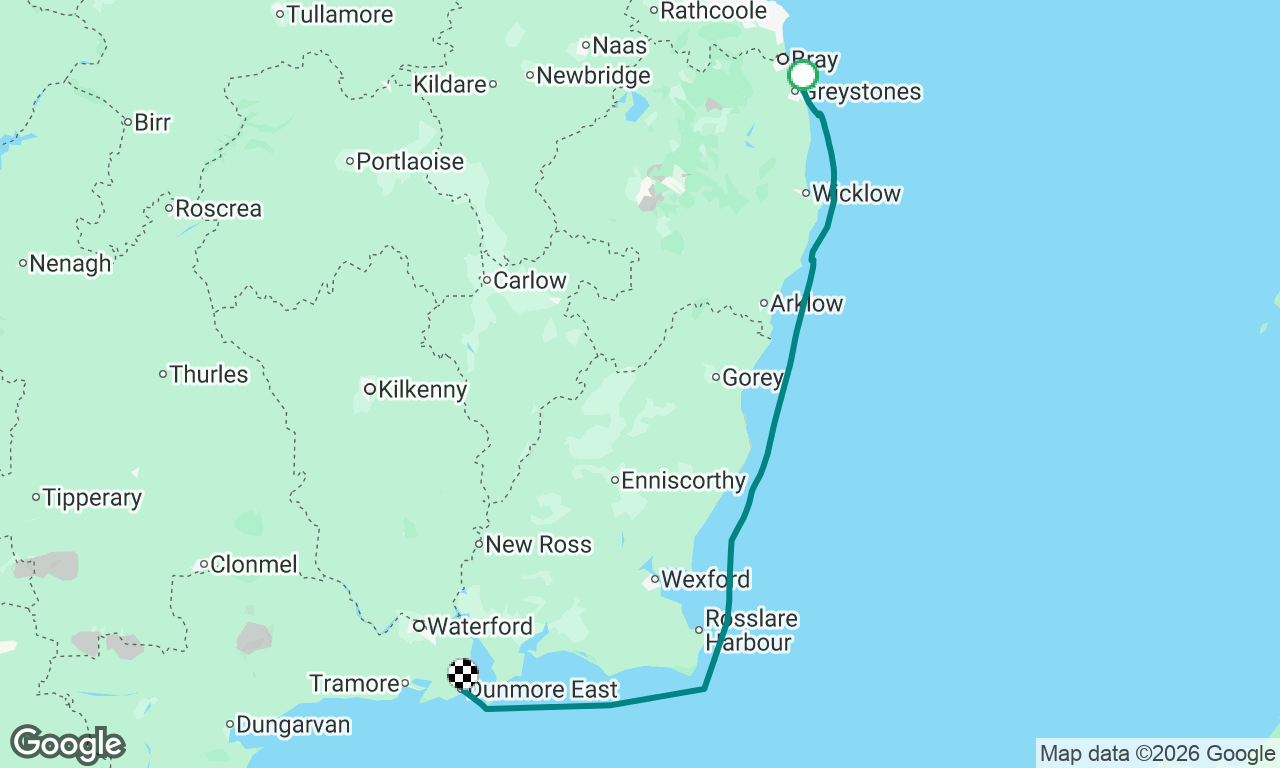
Ballynagaul to Waterford, Ireland
Once we found a safer position with decent sand underneath, Green Bay revealed itself to be just idyllic. The water was crystal clear, the holding was good, and the view across to the other islands was spectacular. We went ashore for a walk around Bryher, but first things first—we got a lovely seafood meal at Island Fish, sitting in the sunshine in their beautiful gardens. There's something about eating fresh fish after a few days of sailing that just hits differently. We then walked around the island, taking in the dramatic western coast at Hell Bay—you can see why it earned that name, with the full force of the Atlantic hammering into the rocky shore. We stopped for coffee and cakes at the rather incongruously named Hell Bay Hotel, which despite its ominous title was actually lovely and welcoming. The contrast between the wild coast outside and the civilized comfort inside was quite something. The following morning we took the tender out to Samson Island, one of the true desert islands of the archipelago. The ruins of the abandoned villages scattered across the island gave it a haunting, otherworldly feel—families lived here until the mid-1800s before the islands were finally evacuated. The walk to the top was well worth the effort, rewarded with a 360-degree panorama of the entire archipelago spread out below us like a map come to life. Most interesting were the fringing reefs west of Samson, a veritable graveyard of ships. This is where Admiral Cloudesley Shovell's fleet came to grief in 1707, causing the loss of four ships and the deaths of some 2,000 sailors—a disaster that finally brought to a head the problem of calculating longitude at sea. Standing there looking at those treacherous rocks, you could understand exactly how even an experienced fleet could be lost on a dark night. We then took the tender from Samson across New Grimsby Sound to Tresco, though "took the tender" is perhaps overstating it. Thanks to the spring low tides, much of the crossing involved me dragging Su Yin and our 11-year-old Tomás in the dinghy through knee-deep water—not quite the dignified arrival we'd envisioned, but it added to the adventure. Once we finally made it to Tresco, we walked over to the other side of the island to Ruin Beach Café, passing Jamie Oliver and family who cycled by us—clearly we weren't the only ones who appreciated the quieter corners of the Scillies. We then headed back to the boat to prepare for an early start the next day—we had a big passage ahead of us to Padstow, some 65 miles to the northeast. The next morning we raised anchor at first light and headed through New Grimsby Sound, threading our way past the rocks and islands as the sun came up behind us. Initially we were making decent progress, clocking 7 knots in light winds under sail. We had considerable assist from strong currents—the tidal streams around the Scillies can be ferocious—but what the tide giveth, the tide taketh away, and eventually those helpful currents turned against us, making for frustratingly slow progress. After a long sail, the pressure was on to make Padstow in time for the opening of the harbour tidal gate at 8pm. Miss that and we'd be stuck outside until the next tide window. Once we established radio contact, the harbour master was very helpful and talked us in. We ended up rafted outside another boat on the northwest side of the harbour—not the most private berth, but we were just grateful to be inside and secured for the night. We got some nice pizza at one of the many local restaurants—Padstow has really embraced its foodie reputation—before retiring for the night, ready for the arrival of the crew for the return passage the next day.
10

Celtic Sea to Padstow, United Kingdom
Having had a restful night in St Martin's Bay, we weighed anchor and set off south around the archipelago in glorious sunshine with a Force 3-4 easterly—finally, some proper sailing weather! With the wind on our beam and the sun sparkling off the water, we had a lovely reach past the Eastern Isles and around the southern tip of St Mary's, taking in the stunning scenery of the scattered islands and rocks that make the Scillies so magical. We approached the Cove anchorage at St Agnes to find it heaving with boats—clearly we weren't the only ones who'd read the pilot book's recommendation for this spot. The anchorage looked more like a marina without the pontoons. However, as the tide rose, we spotted our opportunity and moved into the shallower water closer to shore, making the most of our twin keels. We settled in nicely, perfectly positioned to dry out on the sand. Once ashore, we made our way to the Turks Head, the island's legendary pub perched right above the beach. The atmosphere was brilliant, but the kitchen was clearly under the cosh—we had to wait quite a while for our food as they were prioritizing the groups who'd made the special boat trip over from St Mary's for dinner. Fair enough, but our stomachs were definitely grumbling by the time the food arrived. Still, it was worth the wait. The forecast showed the wind shifting NE overnight, and I felt confident that our SE-facing anchorage would give us decent shelter. Unfortunately, that confidence proved badly misplaced. At 1 am we were jolted awake by a considerable swell that had somehow found its way into the Cove, and our keels were banging ominously on the bottom with each wave. My heart rate shot up instantly—there's nothing quite like that sickening thud of your boat hitting the seabed repeatedly to focus the mind. The problem became clear: with the amount of chain we'd let out for the earlier deeper water, we were now too close to the beach as the tide had dropped, and the swell was breaking uncomfortably close to us. I lay there in the dark listening to each bang, trying to calculate whether we were in real danger or just suffering an uncomfortable night. Eventually I abandoned any hope of sleep and started the engine. The key was timing. I had to work the windlass each time the boat rose on a swell, gaining a few feet of chain with each lift, careful not to pull when we were in a trough with the full weight on the anchor. It was nerve-racking work in the dark, but gradually, surge by surge, I managed to pull her out into deeper water where the keels could float clear. The banging finally stopped, though sleep was hard to come by after that much adrenaline. At first light we abandoned the anchorage, which was now half empty—clearly lots of other boats had also decided to cut their losses during the night. The swell outside the bay was really bad, and as we approached St Mary's Sound the conditions deteriorated further. The wind-against-tide created dangerous breaking waves, and for a moment there was a not insignificant fear of ending up side-on to a large breaking wave. I really had to gun the engine to punch through safely, my knuckles white on the wheel, but thankfully we made it through and into the relative calm of Hugh Town. With a forecast blow coming that evening—30-40 knots SE—we'd hoped to grab one of the public moorings at Hugh Town, but every buoy was taken. We ended up dropping anchor just northwest of the harbour, which was in the lee of the island and should give us decent shelter from the forecast winds. After the previous night's drama, we weren't taking any chances with our ground tackle. We went ashore to sort out the essentials—fuel and water were available at the Harbour Master's office—then treated ourselves to a proper shopping trip and a long walk around St Mary's to stretch our legs and decompress from the morning's excitement. After a bite to eat at The Atlantic, its walls decorated with evocative pictures of ships wrecked around Scilly (a sobering reminder of these waters' reputation), we headed back to Sipadan. The evening was beautiful, with gig crews rowing nearby against the backdrop of a stunning sunset—the Scillies at their best. Despite the strong wind that built through the night, we had an unexpectedly peaceful sleep. The anchorage was perfectly sheltered, and after the previous night's ordeal, the steady pull of the anchor rode and the gentle heel of the boat felt positively luxurious. The next morning we were up at 5am to catch the high tide for crossing Tresco Flats to Bryher—timing is everything in these shallow waters. We entered Green Bay from the southeast, finding a spot close to shore that looked promising. However, after we'd dried out we discovered our first attempt had been over rocks and an uneven seabed—not ideal. We lifted the anchor and moved further south and inshore, feeling more confident. That confidence evaporated when the tide dropped and we could see our actual situation. We'd been incredibly lucky—our rudder was sitting between two rocks, and the same with our keels. One slightly different angle and we could have done some serious damage. It was clear we'd have to move further out and south again on the next tide. Still, Green Bay was spectacular, with crystal clear water and very well sheltered. If we could just find a decent patch of sand, it would be perfect.
6

St Martin's to St Agnes, United Kingdom
Having seen Dad off for his taxi to Newquay airport, Su Yin, Tomas and I got the boat ready for off. Though we got some lovely sailing weather across Falmouth Bay, eventually the wind shifted into an uphill slog under engine, though the weather and scenery was beautiful. Going back over the coast that we had seen made the journey feel long, essentially a delivery trip. We got into Mousehole (pronounced ‘Mowzle’). I hope there are no ‘azzles’ in ‘mowzle’, I thought to myself. Having dropped the anchor just outside the harbour entrance, it was quite late and we were lucky to get a delicious meal at The Mousehole Deli, which is essentially the first restaurant you see coming from the North Pier. After dinner, however, we had to drag the dinghy over the mud to the harbour entrance in the dark as the tide had gone out. We had the anchorage essentially to ourselves, sharing with only 1 other French boat, which was gone by the time we got up the next morning. The anchorage was quite rolly, though having seen the huge oak staves that they use to block the entrance to the harbour in winter, I dread to think what it is like in a blow. We did a run ashore in the early morning to fill 3 water cans, but the only tap was all the way up the south pier, at the public toilets, and you needed a special square key to turn on the tap (or a adjustable wrenchif you had one). Fortunately there were 2 friendly locals setting up a kids fair for later on who lent us the tools that we needed. We had beautiful weather for our journey to Scilly, but since the wind, though strong was completely against us (20kn W), there was little point in raising a sail, we motored the whole way. Once we got to Lands End the seas became very lumpy, with a large oceanic swell, so poor Su Yin took to the bed with ‘mal de mer’. Once again, there was some attention required to safely pass the TSS (Traffic Separation Scheme) with lots of big tankers passing, in addition to the ‘Scillonian’, the passenger/cargo ship that is the lifeblood of the Isles of Scilly. There were also lots of helicopters passing overhead, bringing the wealthier tourists to the archipelago. As we approached our intended anchorage in St Martins Bay, off the east coast of the island of St Martin I began to lose my nerve as I saw the maze of rocks I had to negotiate to get inside. In addition, given the huge swell, it didn’t seem possible that there would be adequate shelter in the anchorage. In the end, I decided to duck in to see, and once past all the rocks, which were thankfully all mostly visible as it was low water, we found a stunning anchorage with lovely calm water. It was relatively crowded with French boats but there was still plenty of room to swing. Anchor down, we relaxed for the afternoon after which we went ashore for a swim at the pristine sandy beach with beautiful clear water. After our swim we went for a hike to air dry and found ourselves at the one of the most quirky and cool bars ever, the Seven Stones. We stayed for a couple of pints and a great meal and Tomas even found some kids from the campsite to play with. As usual we had to drag the dinghy quite a distance when we got back but we had a restful night despite some overnight swell.
9

Mousehole to St Martin's, United Kingdom
Having seen Dad off for his taxi to Newquay airport, Su Yin, Tomas and I got the boat ready for off. Though we got some lovely sailing weather across Falmouth Bay, eventually the wind shifted into an uphill slog under engine, though the weather and scenery was beautiful. Going back over the coast that we had seen made the journey feel long, essentially a delivery trip. We got into Mousehole (pronounced ‘Mowzle’). I hope there are no ‘azzles’ in ‘mowzle’, I thought to myself. Having dropped the anchor just outside the harbour entrance, it was quite late and we were lucky to get a delicious meal at The Mousehole Deli, which is essentially the first restaurant you see coming from the North Pier. After dinner, however, we had to drag the dinghy over the mud to the harbour entrance in the dark as the tide had gone out. We had the anchorage essentially to ourselves, sharing with only 1 other French boat, which was gone by the time we got up the next morning. The anchorage was quite rolly, though having seen the huge oak staves that they use to block the entrance to the harbour in winter, I dread to think what it is like in a blow. We did a run ashore in the early morning to fill 3 water cans, but the only tap was all the way up the south pier, at the public toilets, and you needed a special square key to turn on the tap (or a adjustable wrenchif you had one). Fortunately there were 2 friendly locals setting up a kids fair for later on who lent us the tools that we needed. We had beautiful weather for our journey to Scilly, but since the wind, though strong was completely against us (20kn W), there was little point in raising a sail, we motored the whole way. Once we got to Lands End the seas became very lumpy, with a large oceanic swell, so poor Su Yin took to the bed with ‘mal de mer’. Once again, there was some attention required to safely pass the TSS (Traffic Separation Scheme) with lots of big tankers passing, in addition to the ‘Scillonian’, the passenger/cargo ship that is the lifeblood of the Isles of Scilly. There were also lots of helicopters passing overhead, bringing the wealthier tourists to the archipelago. As we approached our intended anchorage in St Martins Bay, off the east coast of the island of St Martin I began to lose my nerve as I saw the maze of rocks I had to negotiate to get inside. In addition, given the huge swell, it didn’t seem possible that there would be adequate shelter in the anchorage. In the end, I decided to duck in to see, and once past all the rocks, which were thankfully all mostly visible as it was low water, we found a stunning anchorage with lovely calm water. It was relatively crowded with French boats but there was still plenty of room to swing. Anchor down, we relaxed for the afternoon after which we went ashore for a swim at the pristine sandy beach with beautiful clear water. After our swim we went for a hike to air dry and found ourselves at the one of the most quirky and cool bars ever, the Seven Stones. We stayed for a couple of pints and a great meal and Tomas even found some kids from the campsite to play with. As usual we had to drag the dinghy quite a distance when we got back but we had a restful night despite some overnight swell.
8

Fowey to Mousehole, United Kingdom