


When you learn to sail, one of the first big concepts you'll hear about is "points of sail." It sounds technical, but it's really just a way of describing the different directions your boat can travel in relation to the wind.
Once you understand points of sail, everything else—sail trim, steering, tacking, jibing—starts to make a lot more sense. Let's break it down step by step, in simple language.
1. First: Know Where the Wind Is Coming From
Imagine you're standing on your boat, looking forward. The wind direction is the reference for everything you do.
- If the wind is blowing straight into your face, you're pointed directly into the wind.
- If you turn so the wind is hitting your side, you're sailing across the wind.
- If it's hitting your back, you're going with the wind, or downwind.
Every point of sail is just a name for one of these general directions relative to the wind.
2. The No-Go Zone: Where You Cannot Sail
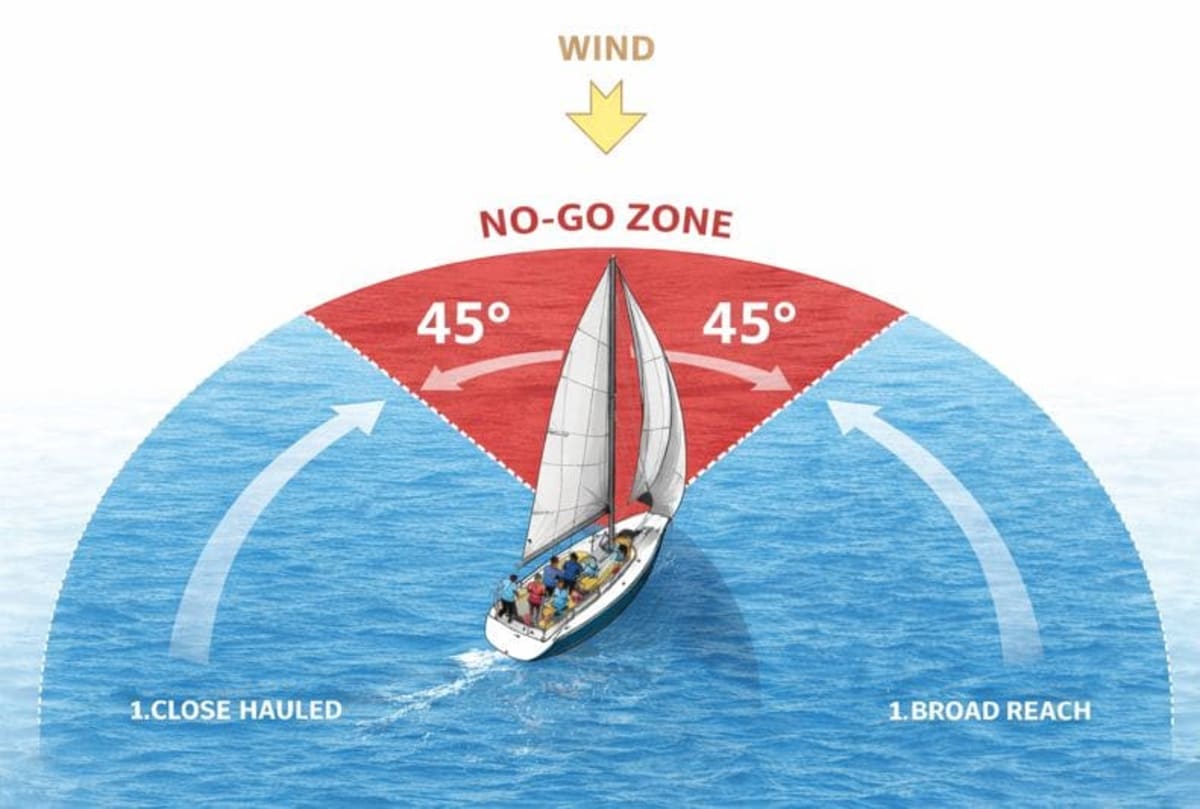
There's one key rule of physics in sailing:
A sailboat cannot sail directly into the wind.
The area directly in front of the wind, roughly 45° on either side of the wind direction (about a 90° wedge), is called the no-go zone.
- When your boat points into this zone, your sails will luff (flap), and you'll lose speed.
- You can't move forward, no matter how much you pull on the sails.
To make progress in the direction the wind is coming from, you have to sail close to the wind, but not directly into it, and zigzag back and forth. That brings us to the first real point of sail.
3. Close-Hauled: As Close to the Wind as You Can Go
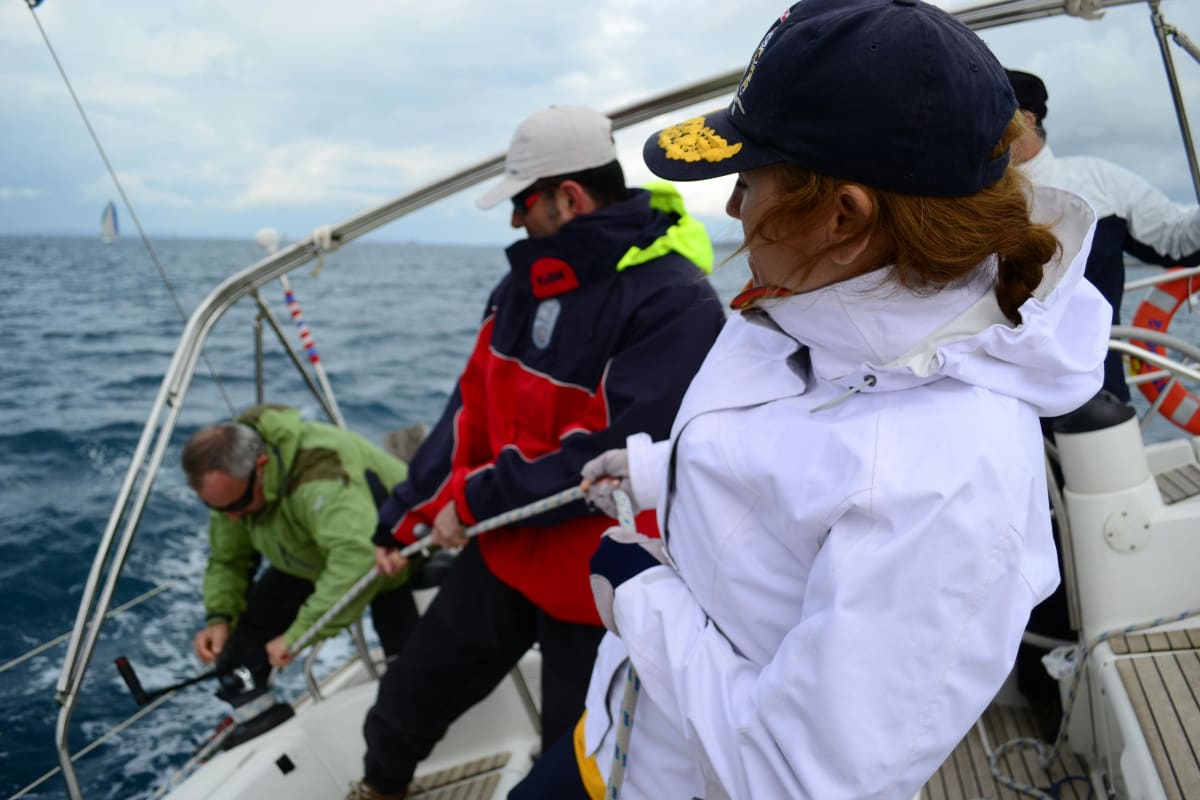
Close-hauled is the point of sail just outside the no-go zone, typically about 30–45° off the wind.
- You're sailing as close to the wind as the boat allows.
- Your sails are pulled in tight.
- The boat is usually heeling (leaning) and moving efficiently, but it's important to stay in control.
Key features of close-hauled:
- Sails: Sheeted in hard (pulled toward the center of the boat).
- Helm: You steer carefully to keep a steady angle to the wind.
- Use: This is how you make progress upwind.
From close-hauled, if you turn a little away from the wind, you reach the next point of sail.
4. Close Reach: Just Off the Wind

A close reach is when you're sailing at an angle between close-hauled and a beam reach, still somewhat toward the wind, but not as extreme.
Think of it like this:
- Close-hauled: very close to the wind, sails in tight
- Close reach: slightly farther off the wind, sails can be eased out a little
Why sailors like the close reach:
- It's faster and more comfortable than close-hauled.
- The boat still feels powerful, but you're not right on the edge of the no-go zone.
- It's a common point of sail when you're generally headed upwind but don't need to sail as high as possible.
5. Beam Reach: Across the Wind (Often the Sweet Spot)
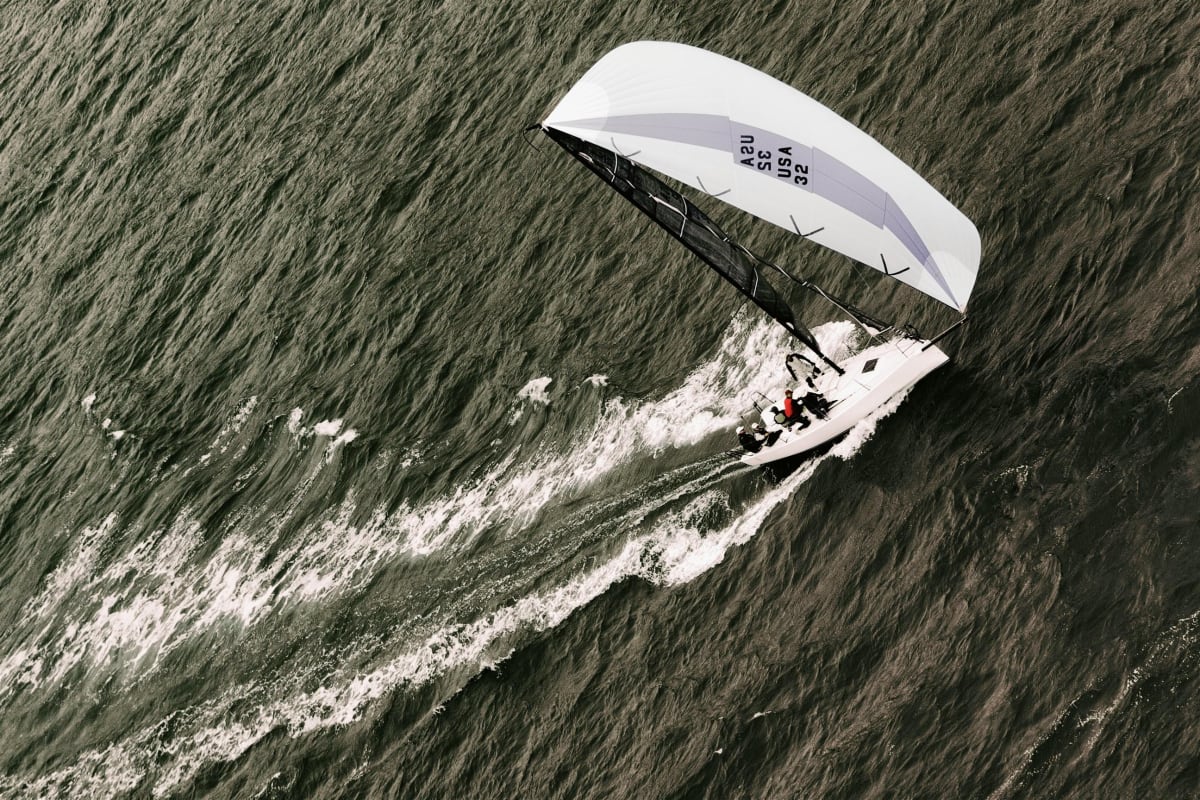
A beam reach is when the wind hits your boat directly from the side, at about 90° to your direction of travel.
- Imagine the wind hitting you right in the ear as you face forward—that's a beam reach.
- For many boats, a beam reach is one of the fastest and most stable points of sail.
Characteristics of a beam reach:
- Sails: Eased out more than on a close reach, but not all the way.
- Speed: Often maximum speed or very close to it.
- Stability: The boat feels solid; steering is usually easier.
If you turn the boat so the wind comes more from behind, you move to the next point of sail.
6. Broad Reach: Wind from Behind the Side
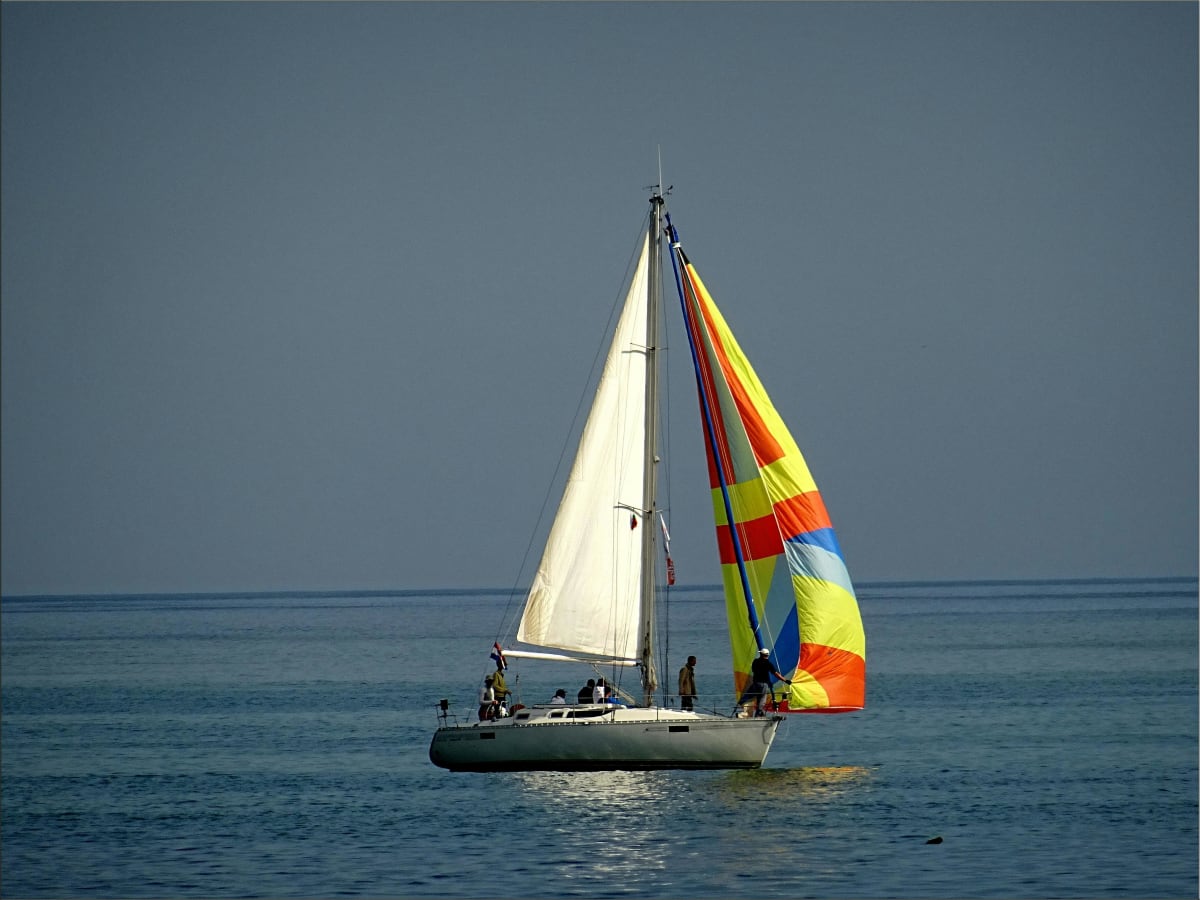
A broad reach happens when the wind is coming from behind your shoulder, roughly 120–160° off the bow.
- You're sailing downwind, but not directly with the wind behind you.
- It's usually comfortable, fast, and stable.
On a broad reach:
- Sails: Eased out even farther, sometimes close to all the way.
- Steering: Still fairly easy; the boat feels smooth and powerful.
- Use: Great for longer downwind legs—many sailors love this angle.
Turn even more so the wind is directly behind you and you'll be on a run.
7. Running: Sailing Straight Downwind
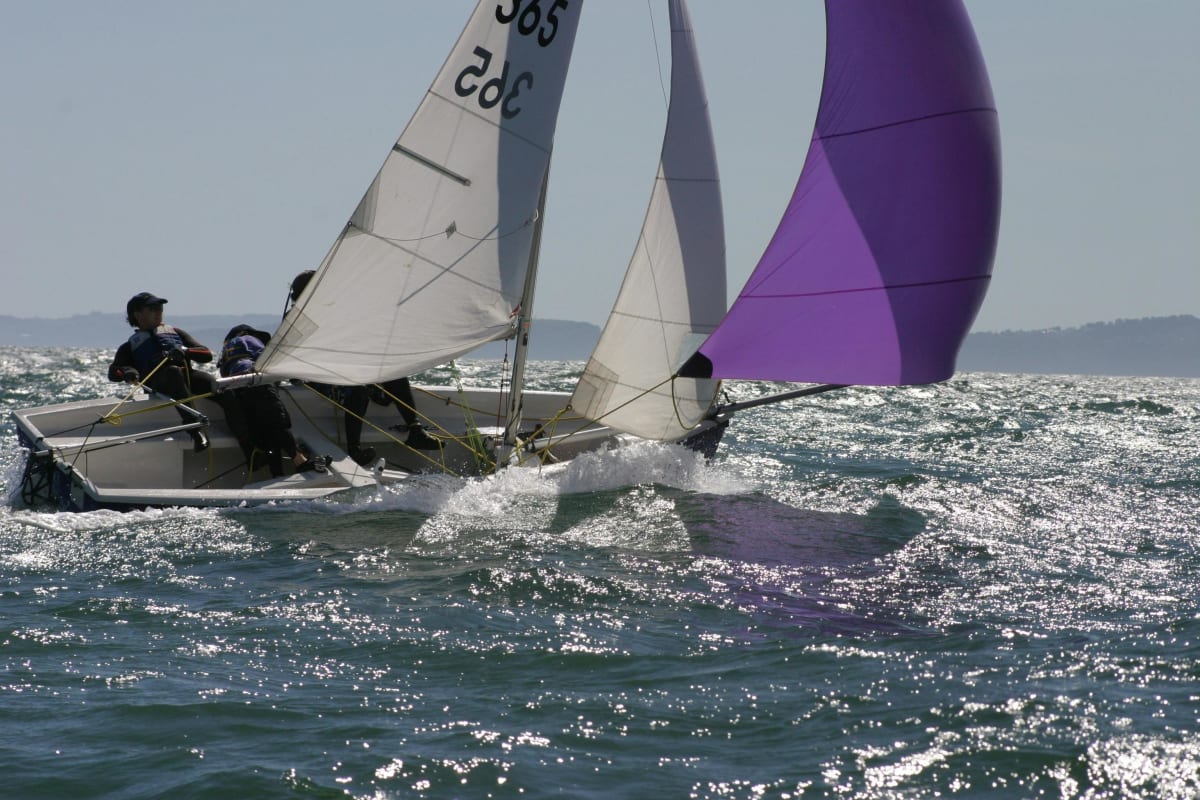
When the wind is blowing directly from behind, you're running (often just called "downwind" or "on a run").
This point of sail has its own personality:
- Sails: Eased out all the way, sometimes with special downwind sails like spinnakers.
- Speed: Can be good, but sometimes not as fast as a broad reach because the apparent wind (the wind you feel on the boat) is reduced.
- Risk: You need to be careful about accidental jibes (when the boom swings forcefully from one side to the other).
Many sailors actually prefer a broad reach to a pure run because it's often faster and safer.
8. Tacking and Jibing: Changing Sides Relative to the Wind
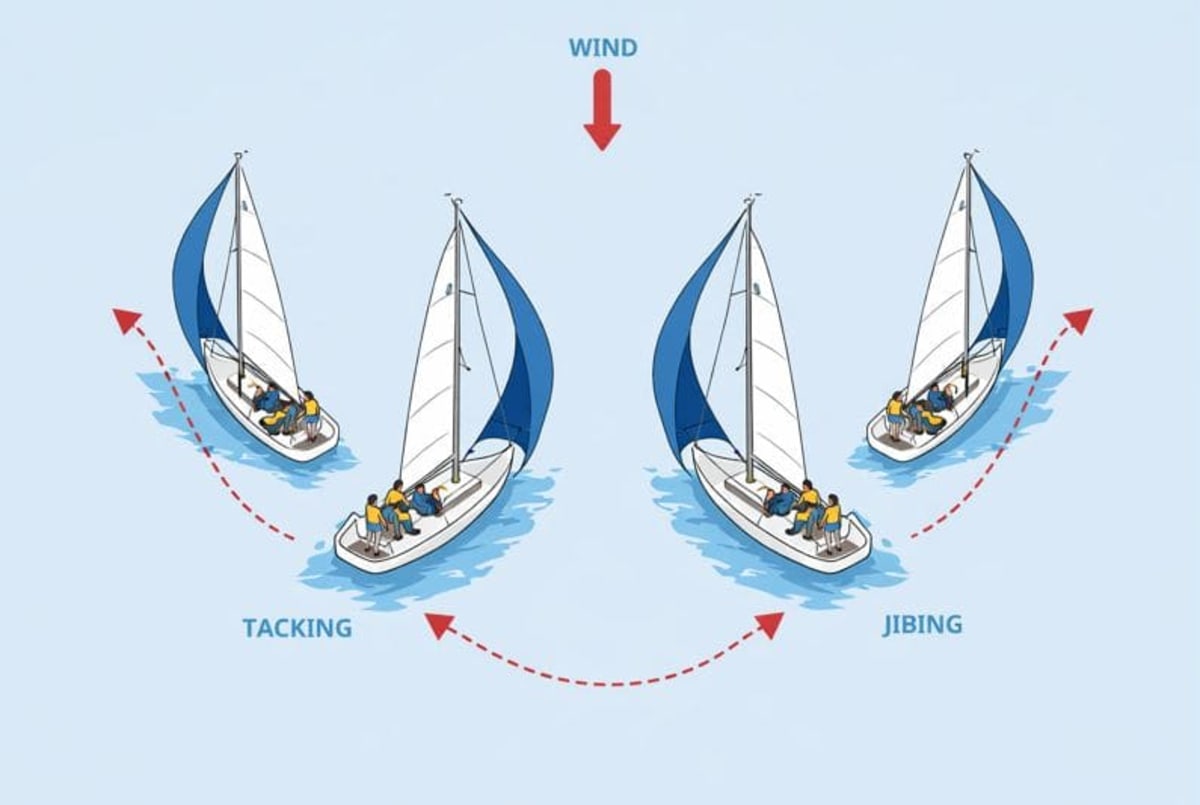
Understanding points of sail also helps you grasp tacks and jibes, which are just terms for crossing the wind.
Tacking (Turning Through the Wind from Upwind Side)
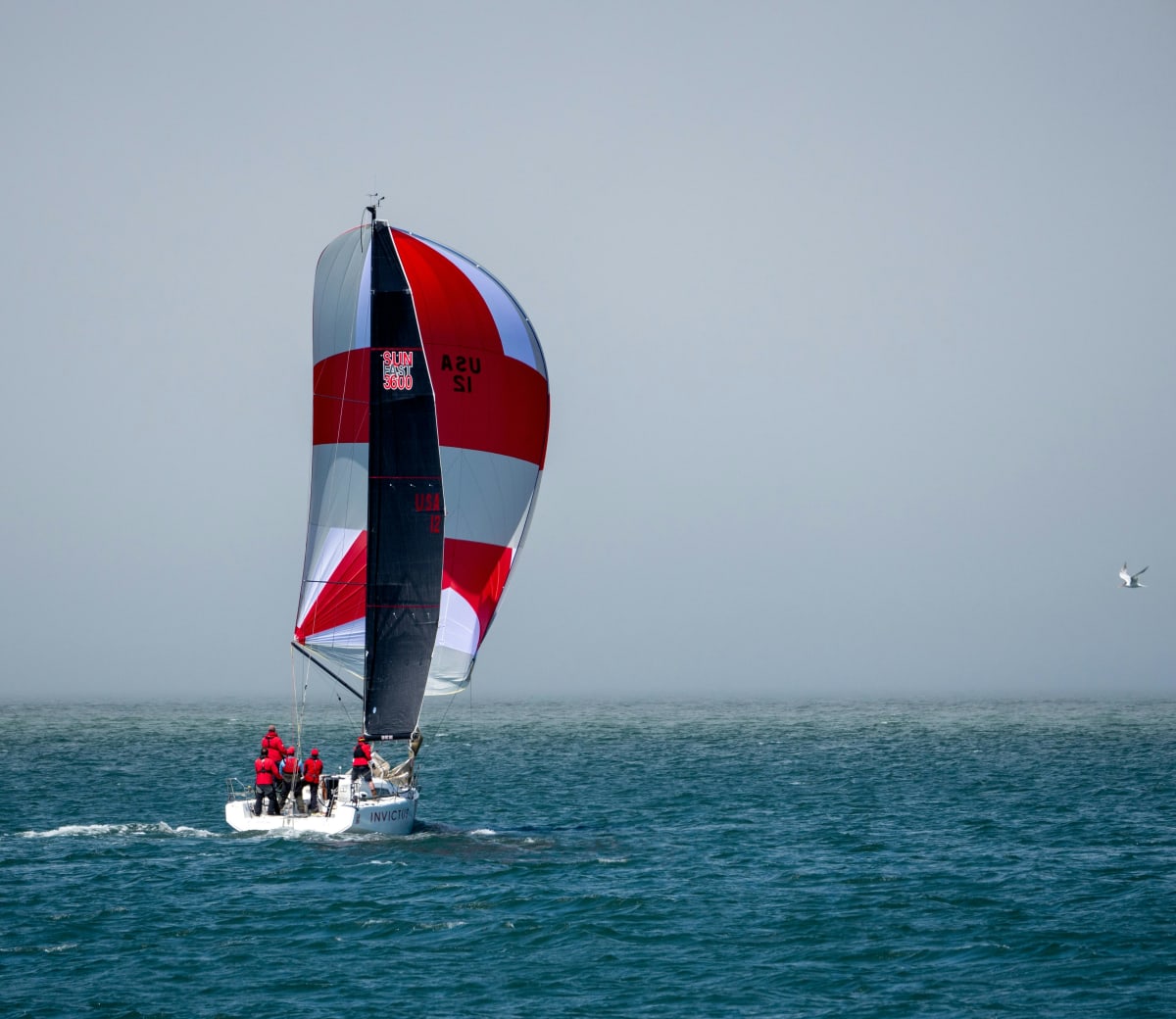
- You tack when your bow turns through the wind.
- This is how you change direction when sailing upwind or on higher angles, like close-hauled or close reach.
- Before the tack, the wind is coming over one side (say, the port side). After the tack, it comes over the starboard side.
Jibing (Turning Across the Wind from Downwind Side)
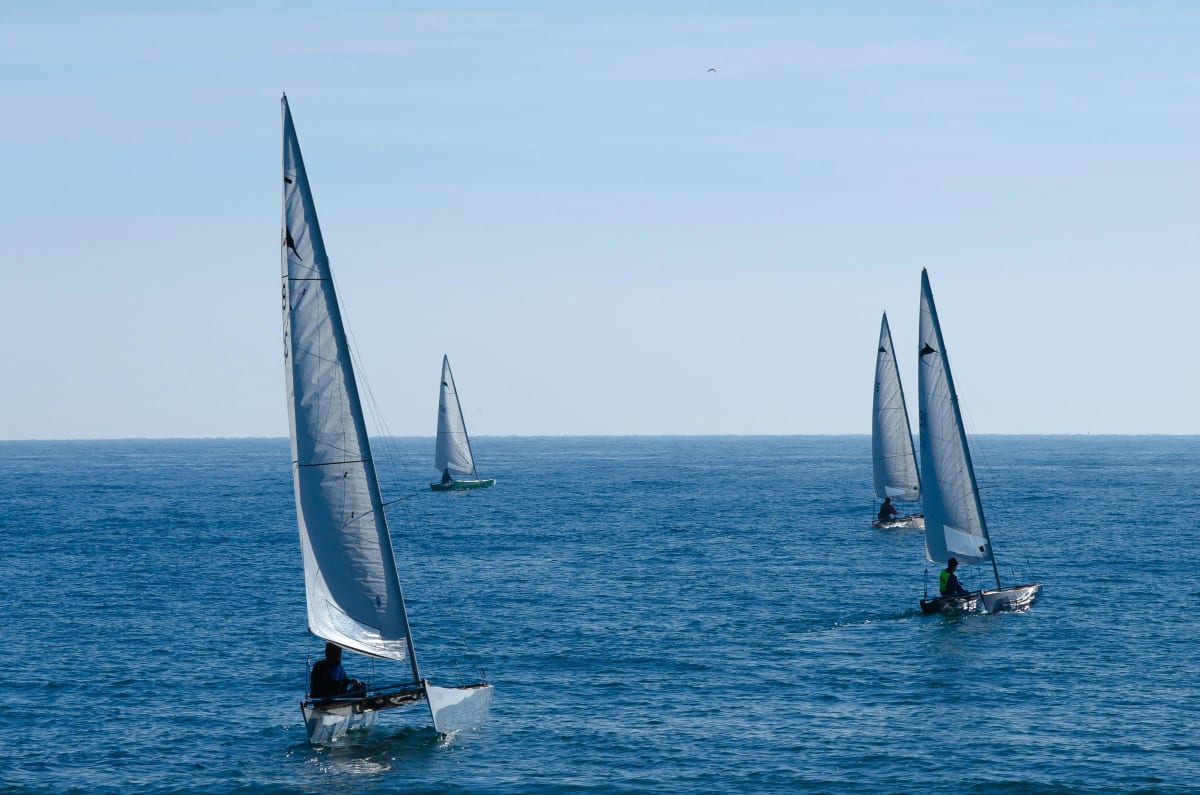
- You jibe when your stern (the back of the boat) passes through the wind.
- This happens when sailing downwind (broad reach or run).
- It's more risky than tacking because the boom can swing across quickly and with a lot of force.
Knowing your point of sail helps you decide when and how to tack or jibe safely.
9. Sail Trim for Different Points of Sail

One of the most important skills in sailing is learning to trim your sails correctly for each point of sail.
A simple rule of thumb:
- Closer to the wind → sails tighter (in)
- Farther from the wind → sails looser (out)
You can do a quick "sail trim test":
- Start with the sails slightly too far out.
- Slowly pull them in until they stop flapping and the boat feels powered up.
- If the sails start to luff near the front (the luff of the sail), pull in a bit more or steer slightly away from the wind.
Every point of sail has a "sweet spot" where the sail angle and wind angle match nicely. Your job is to keep the boat in that sweet spot.
10. Why Points of Sail Matter So Much

You might wonder: why is all this naming important? Why not just "upwind," "across," and "downwind"?
Points of sail matter because they help you:
- Communicate clearly with crew and instructors.
- Choose the best angle for speed, comfort, or safety.
- Plan your route, especially when heading somewhere that's upwind of you.
- Trim your sails correctly, which makes sailing smoother and more efficient.
When someone says, "We'll sail on a beam reach to that mark, then tack upwind close-hauled," you'll know exactly what they mean.
11. A Quick Recap of the Main Points of Sail

Here's a simple summary you can keep in your head:
- No-go zone – Directly into the wind; you can't sail here.
- Close-hauled – As close to the wind as possible; sails tight, sailing upwind.
- Close reach – Slightly off the wind; still upwind but more relaxed.
- Beam reach – Wind from the side; often fastest and most comfortable.
- Broad reach – Wind from behind the side; downwind, fast and stable.
- Run – Wind from directly behind; fully downwind, watch for jibes.
If you can picture these positions around your boat, like points on a circle with the wind at the center, you've basically mastered the concept.
12. Final Thoughts

Learning the points of sail is like learning the basic grammar of a new language. At first, it might feel like a lot of new terms—close-hauled, beam reach, broad reach—but very quickly, they become natural.
Next time you're on a boat, try this:
- Look at where the wind is coming from.
- Guess your point of sail.
- Adjust your sails according to the rules above.
Soon you won't just be riding on a boat—you'll actually be sailing it with understanding and control.
Scan to download