Professionally interested in why boats get into trouble. Personally trying not to contribute to the statistics. Chasing horizons, collecting miles and enjoying the journey.

9 August 2026 at 08:13
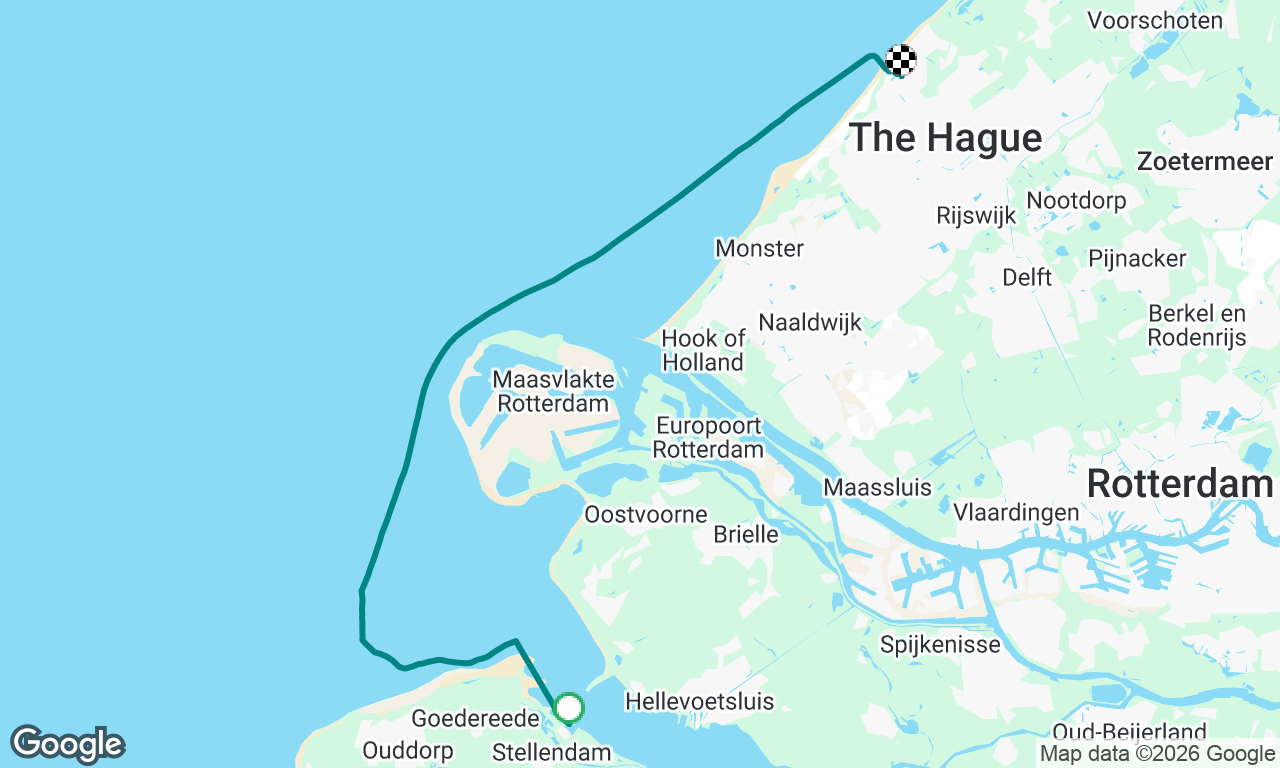
We left Marina Stellendam for the final passage back to Scheveningen. It was a warm day with relatively little wind, so although we did get some sailing in, we spent a substantial part of the passage under engine. That actually created plenty of opportunity to concentrate on navigation and seamanship. We spent a lot of time identifying the buoys and marks around us, interpreting their shapes, colours and topmarks, and relating what we saw outside to the chart and our position. With plenty of commercial traffic in the area, we also worked with AIS: identifying ships, looking at their course and speed and using the information to build a better picture of the traffic around us. We discussed VHF communications, what information is useful and when, and how all these different sources contribute to situational awareness. On the way north we crossed the Maasmond, the busy entrance to the Port of Rotterdam, for the second time during the trip. With large commercial vessels entering and leaving Rotterdam, it was a good practical environment for bringing together visual lookout, buoyage, AIS, communications and an understanding of the traffic situation. Currents were another theme of the day. We went further into why tidal currents behave as they do, how their direction and speed change through the tidal cycle, and how that translates into course and speed over the ground. After the previous day’s work on tides, it helped connect the theory to what we could actually see happening to the boat. Our instructor also passed on quite a few traditional seaman’s rules of thumb accumulated over many years at sea: estimating angles using a fist at arm’s length and relating that approximately to the old compass “streken”, using the position of the sun as a rough indication of time, thinking of short distances in cables, and several other simple techniques that pre-date the electronics we now rely on. They may not replace modern navigation, but they were a nice reminder of the practical knowledge generations of sailors used to understand what was happening around them. We eventually returned to Scheveningen, completing four very different days on the water. After the strong winds, rough sea and diversion of the first day, it was fitting to finish in warm, light conditions with more time to observe, ask questions and absorb some of the finer points of seamanship. A relaxed and enjoyable final passage—and a good end to a trip that turned out to be about considerably more than simply building miles.
2
Uitwateringssluizen to Statenkwartier, The Netherlands
8 August 2026 at 09:45
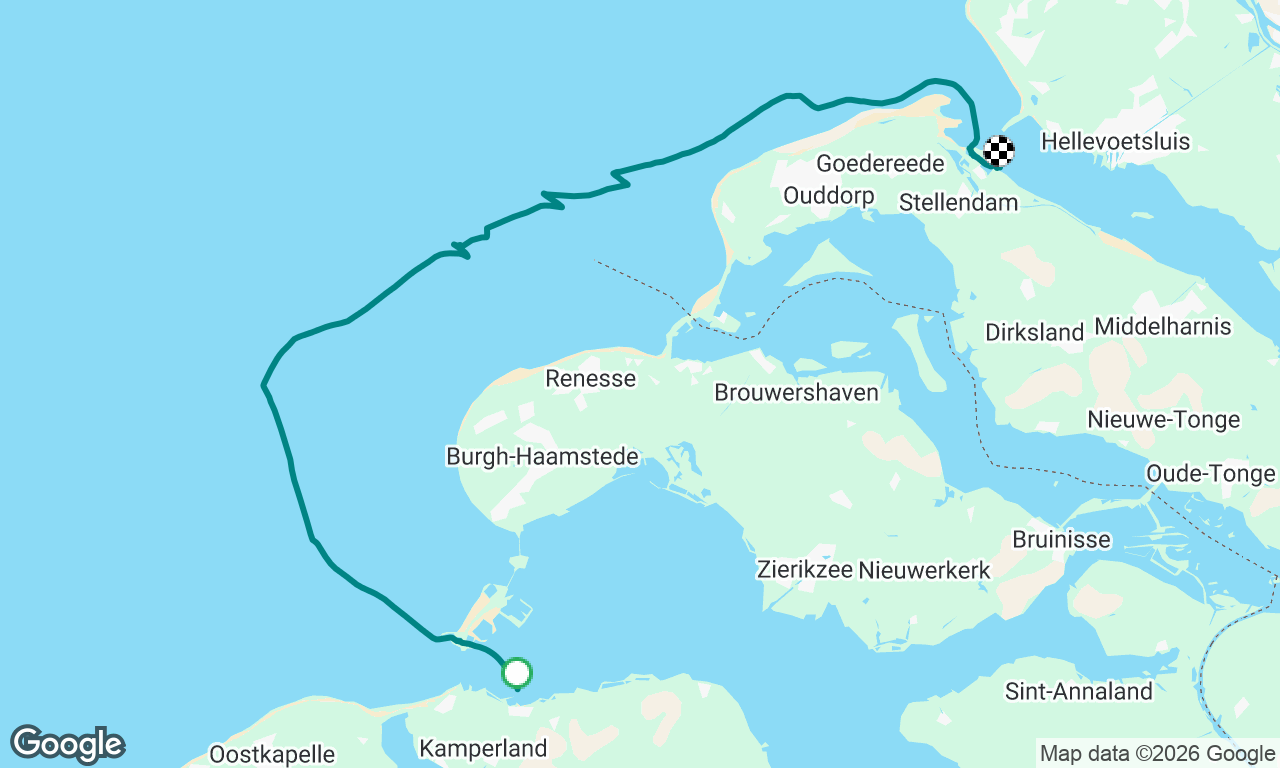
We left Sophiahaven at Kamperland and headed back towards Stellendam, deliberately staying close to the North Sea so that we could use our final day for some more sea sailing. Conditions were moderate and much more manageable than on our first day, with winds around Beaufort 3 and temperatures in the low twenties. After leaving the Oosterschelde we headed north along the coast towards Goeree. The main theme of the day was tides and currents. We worked with the tidal information when planning the passage and paid much more attention to what the current was actually doing to the boat, not just where we were pointing, but the difference between heading, course over the ground and speed over the ground. It was a useful demonstration of how significantly the tide can influence a coastal passage and why timing matters. I was at the helm for the lock manoeuvring, which added another useful learning experience. Handling a 38-foot yacht at low speed in the confined space of a lock, with other vessels nearby and wind and current still having an effect, is quite different from steering in open water. Small inputs, anticipating the boat’s momentum and having the lines and crew ready before entering made a noticeable difference. After sailing north we entered through the Goereese Sluis and returned to Marina Stellendam for the night, putting us in a good position to head back out to sea for the final day. Another very useful day: less demanding in terms of weather, but with much more focus on understanding how tide and current affect the passage, and on developing confidence manoeuvring the boat in confined waters.
3
Sophiahaven to Binnenhaven, The Netherlands
7 August 2026 at 12:26
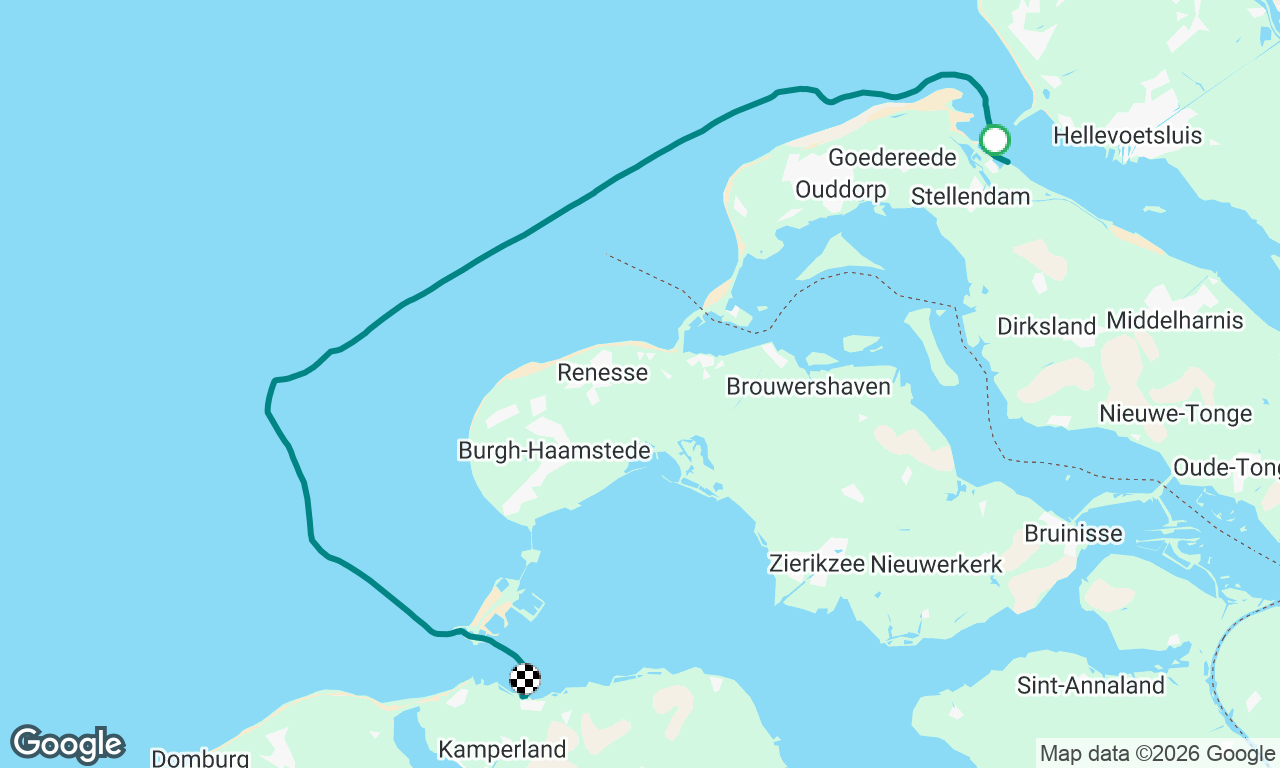
We left Stellendam in much calmer conditions than the previous day and headed south along the coast towards Zeeland. The wind was light to moderate, generally around Beaufort 2–3, and the sea was considerably more comfortable, giving us a very different sailing day. With the boat settled and everyone feeling better, much of the day became a practical lesson in sail trim. We experimented with small adjustments to the sails and saw how relatively minor changes in shape, tension and angle could produce extra speed without making the boat less comfortable. It was a useful introduction to the idea that good sail trim is not simply about making the boat go as fast as possible, but about finding an efficient and balanced configuration for the wind, sea and crew. We continued south and entered the Oosterschelde through the Roompotsluis at the Oosterscheldekering. Passing the Delta Works from the water was an impressive part of the passage. From there it was only a short distance to Sophiahaven, where we berthed at Roompot Marina in Kamperland. After the demanding first day, this was a much more relaxed passage and an opportunity to concentrate on the finer points of sailing: keeping the boat balanced, watching the effect of each trim adjustment and learning how a little extra attention can translate into both speed and comfort.
4
Uitwateringssluizen to Sophiahaven, The Netherlands
6 August 2026 at 11:48
We left Scheveningen just before noon with the intention of crossing the North Sea to England. Once offshore we encountered a fresh and very gusty westerly to northwesterly wind and a lively, uncomfortable sea. We reefed the sails and continued west for about four hours, but the combination of the gusts and persistent waves made for demanding conditions. Three of the six people on board became seasick. With a long crossing still ahead of us, we decided that continuing to England was no longer the sensible option and altered course for Stellendam. We reached Stellendam around 20:00 and moored outside the Goereese Sluis while waiting for the next lock passage. At approximately 23:30 we transited the Goereese Sluis and continued into Marina Stellendam, berthing around midnight. A useful lesson from the day was how little the mean wind speed alone says about conditions at sea. Even with winds that might not look particularly exceptional on paper, the combination of gusts, sailing into the wind and waves, and an already developed North Sea made the motion considerably more demanding. It was also a good reminder that passage decisions are about the combined state of the weather, sea, vessel and crew, not simply whether the boat itself can continue. Not the Channel crossing we had planned, but a valuable day of reefed sailing in a lively sea, adapting the passage plan to the condition of the crew, and finishing the day with a night transit through the lock and final approach and berthing in Stellendam.
3
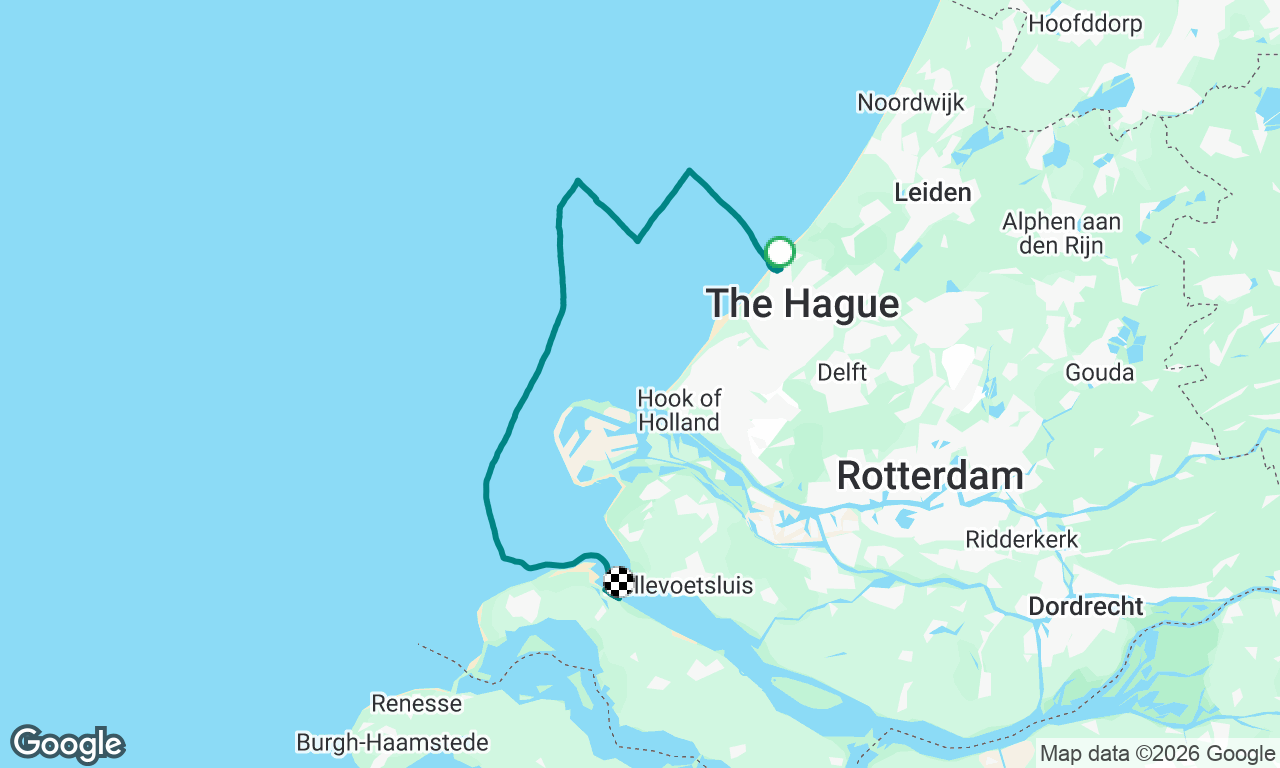
Scheveningen to Binnenhaven, The Netherlands
29 August 2014 at 09:00
Departed the anchorage off Es Trenc for the final passage back to Palma. Enjoyed a relaxed sail along Mallorca’s south coast before berthing Peter Pan IV at La Lonja Marina and concluding an unforgettable first charter as skipper. Typical Mediterranean summer weather with sunshine, slight seas and a gentle afternoon breeze.
4
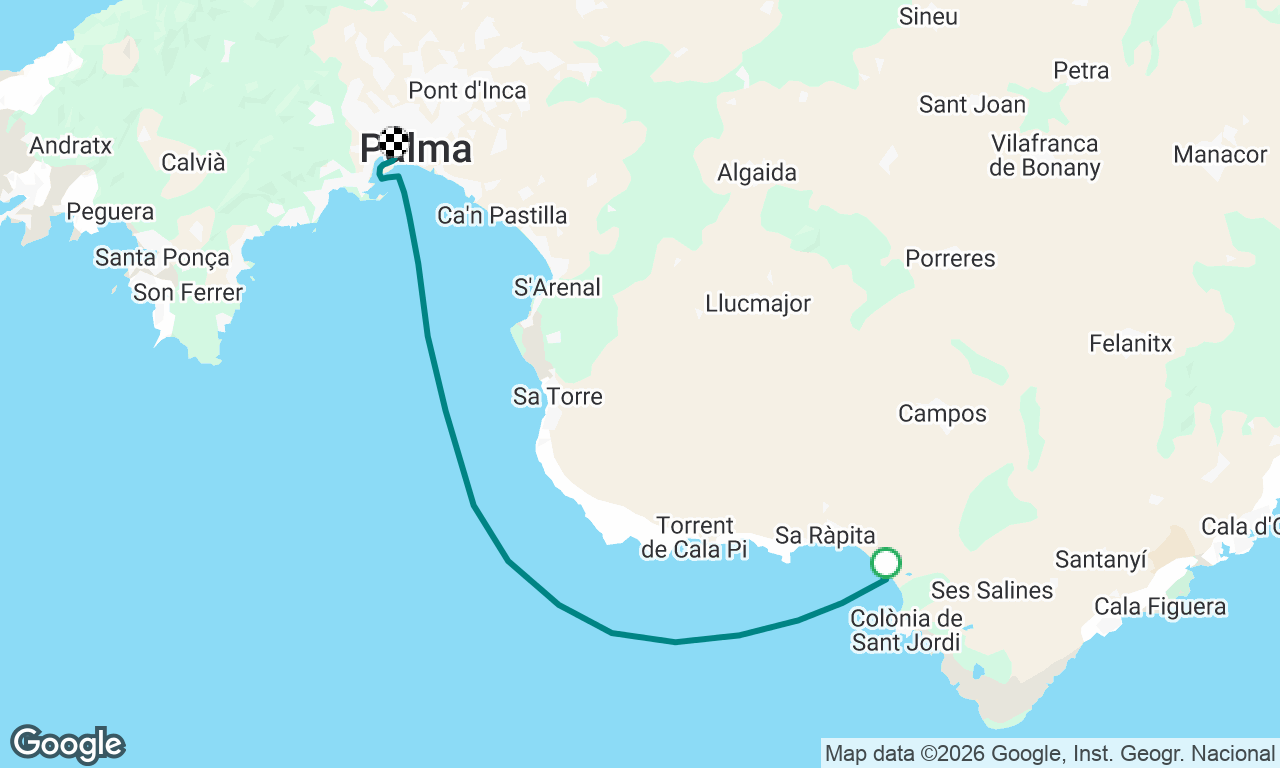
Ses Covetes to Palma, Spain
28 August 2014 at 09:00
Departed Porto Petro in the morning and sailed south to Caló des Màrmols, where we anchored for lunch and a swim. Continued west during the afternoon to the anchorage off Es Trenc near Sa Ràpita, arriving in the late afternoon and anchoring for the night. Warm, sunny conditions with a light to moderate easterly sea breeze and slight seas.
4
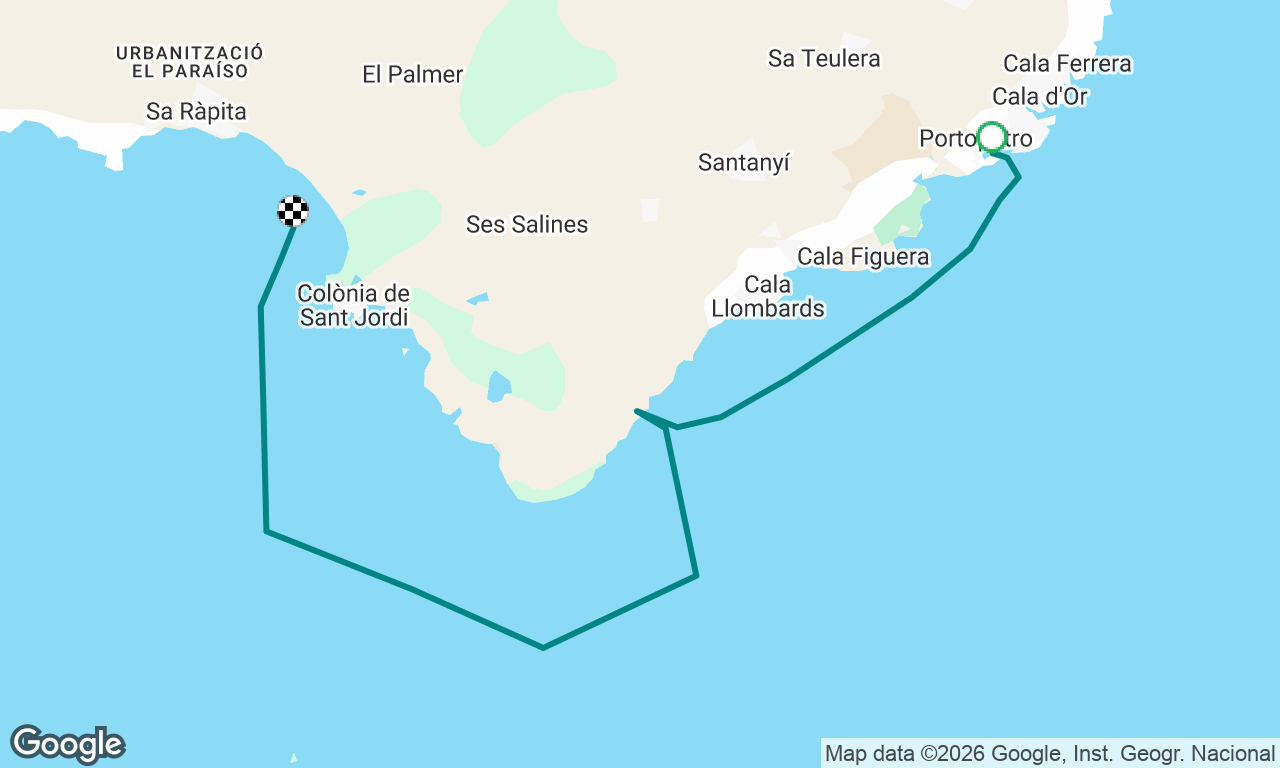
Portopetro to Ses Covetes, Spain
27 August 2014 at 09:00
Weighed anchor in Cala Virgili and turned south along Mallorca’s southeast coast to Porto Petro. Anchored near Cala sa Torre and spent the evening in the peaceful natural harbour. Another warm summer day with light afternoon sea breezes, good visibility and slight seas.
4
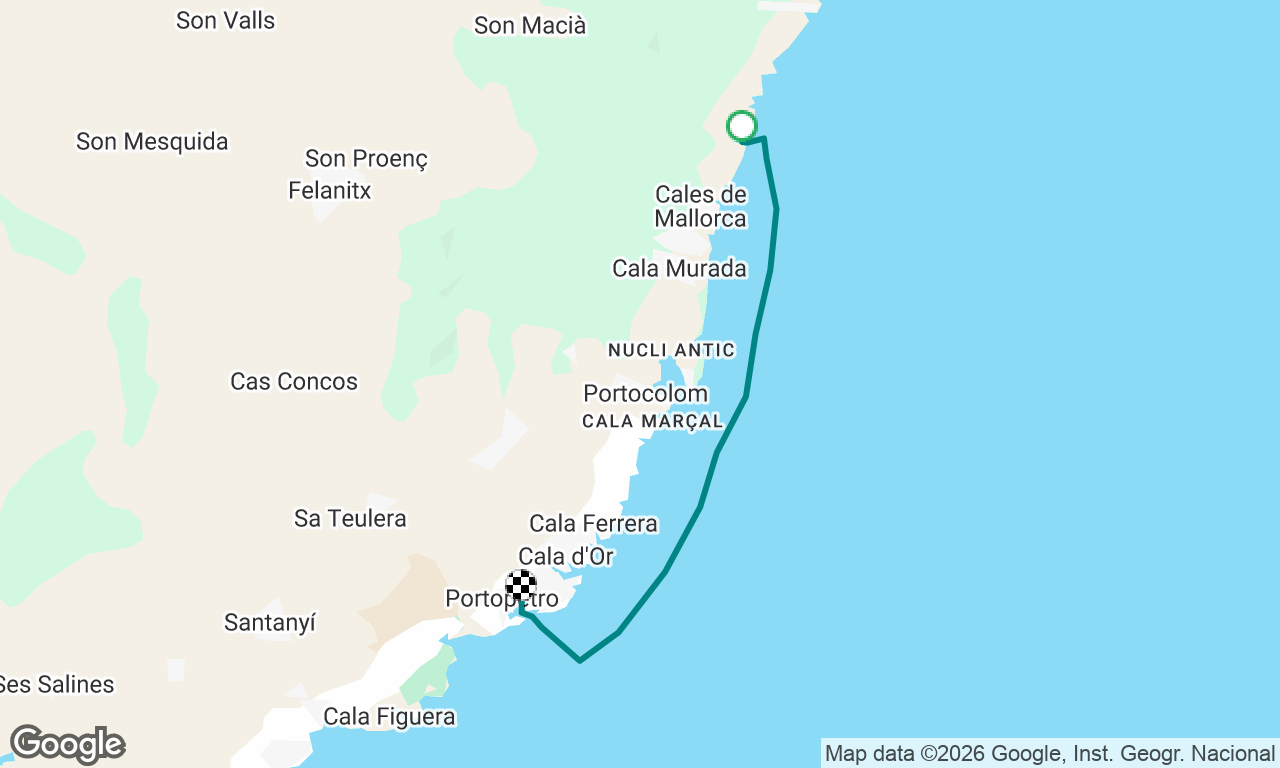
Cala Virgilia to Portopetro, Spain
26 August 2014 at 09:00
Departed Portocolom after breakfast and enjoyed a short coastal passage south to Cala Virgili. Anchored in the sheltered bay near Cala Magraner and spent the afternoon swimming and relaxing ashore. Warm, sunny conditions with light southeasterly winds and calm to slight seas.
4
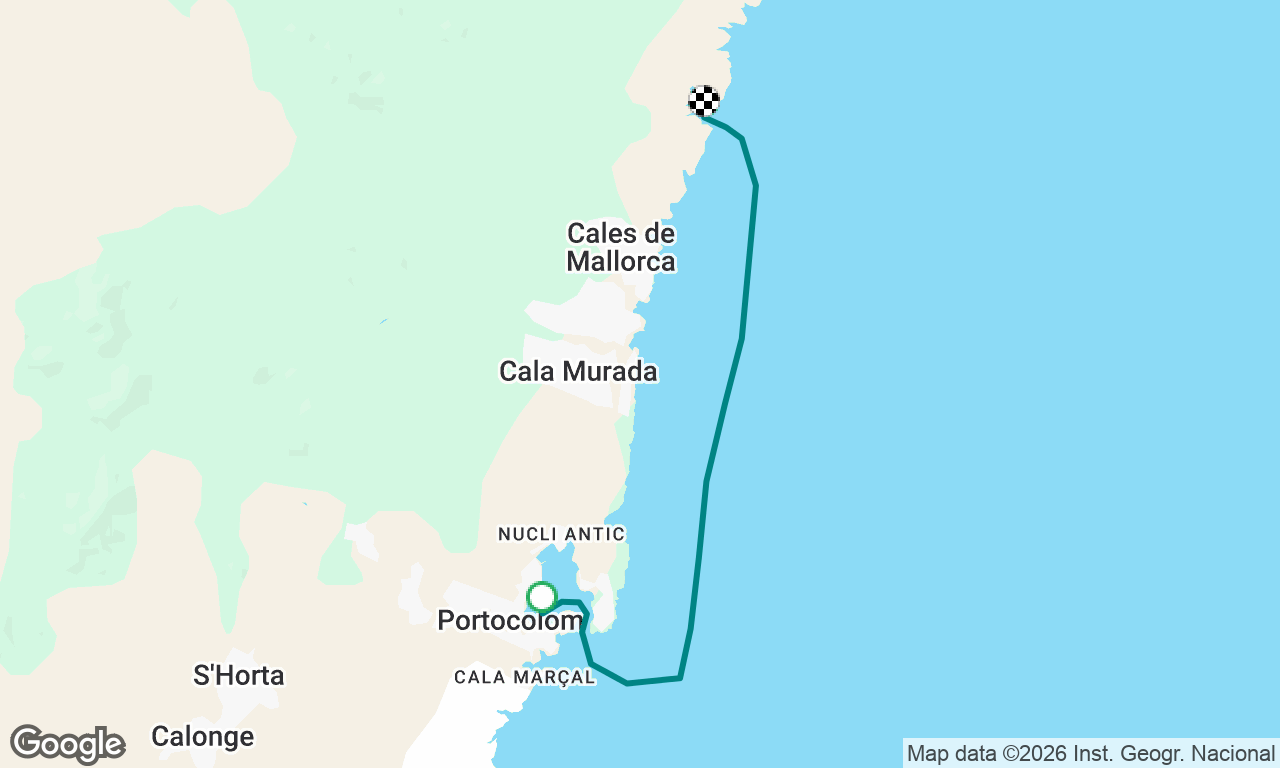
Portocolom to Cala Virgilia, Spain
25 August 2014 at 09:00
Woke to a spectacular sunrise over Cala Mondragó before weighing anchor. Enjoyed a relaxed coastal passage to Portocolom, where we spent the night in the marina. Another warm Mediterranean summer day with light to moderate winds and calm seas.
3
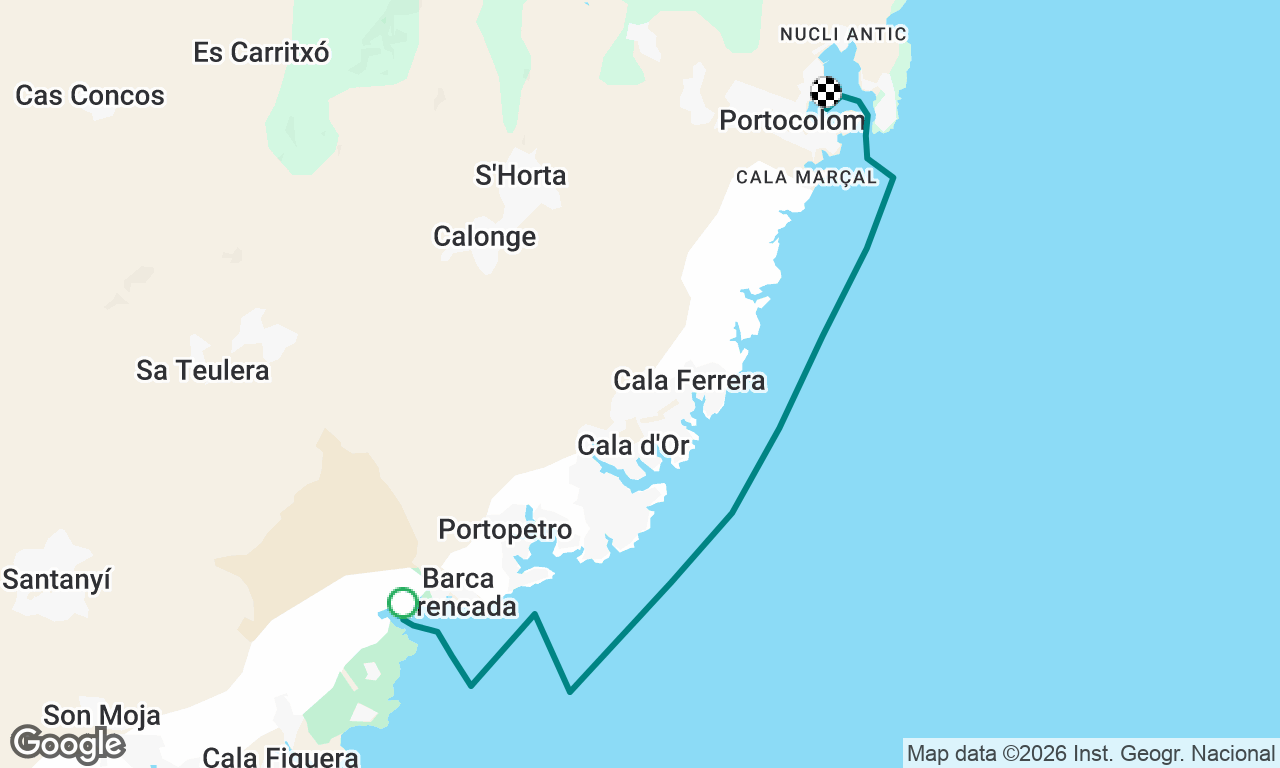
Cala Barca to Portocolom, Spain
24 August 2014 at 09:00
Weighed anchor in the morning and sailed via Cala des Caragol to Cala Mondragó. Enjoyed a lunch stop and swim before continuing to the overnight anchorage. Typical Mediterranean summer conditions with sunshine, a light afternoon sea breeze and slight seas.
3
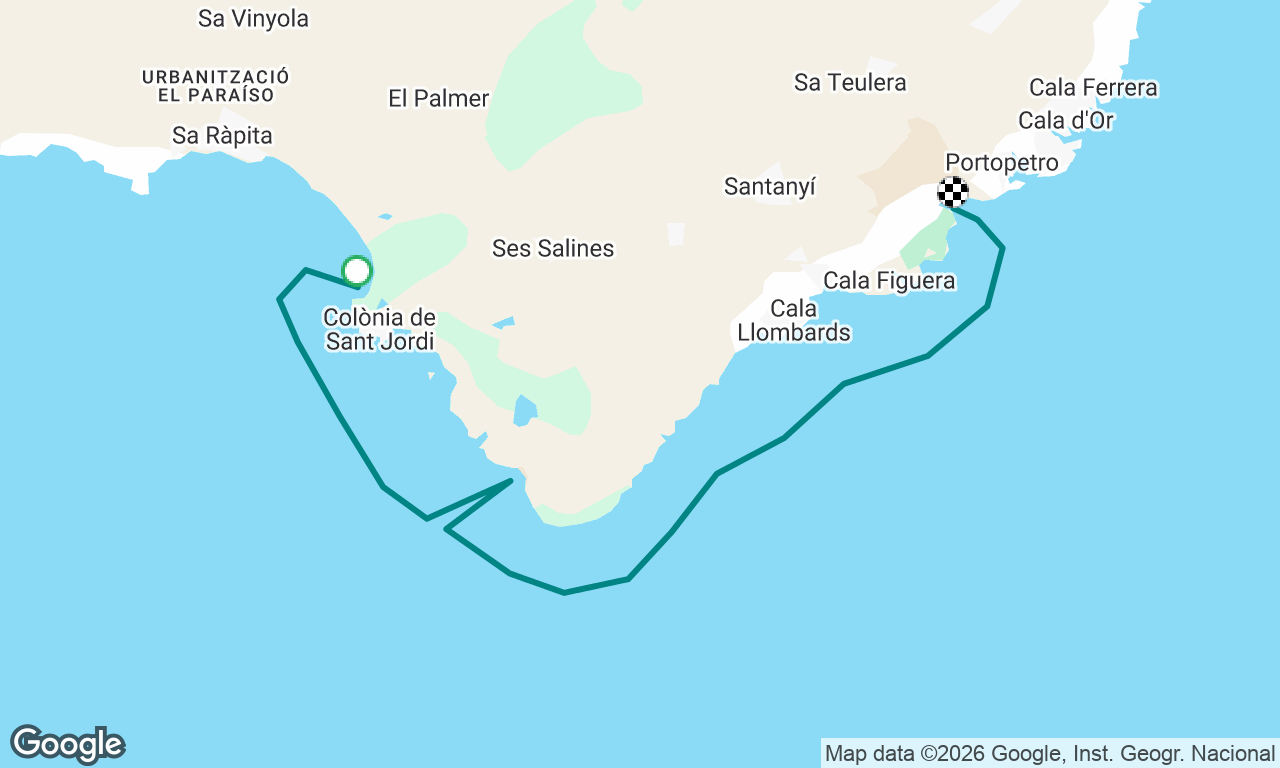
Colònia de Sant Jordi to Cala Barca, Spain
Download SailTies to view more voyages and start recording your own.
Scan to download