


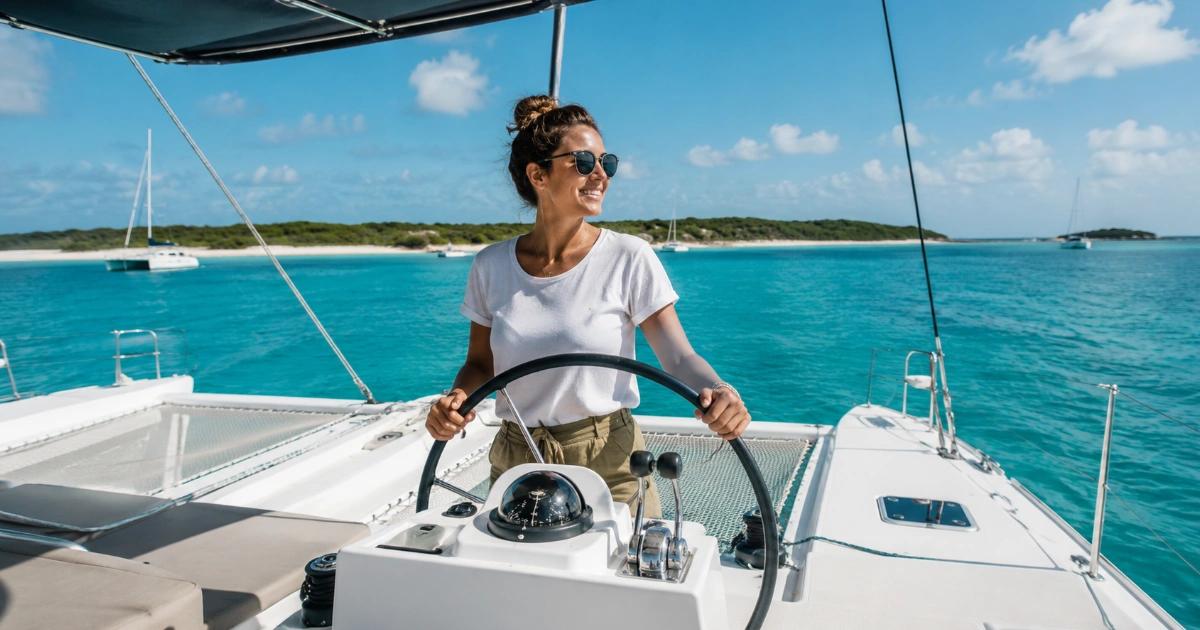
Yes, beginners can sail a catamaran, and in several ways it's an easier boat to start on than a monohull. Catamarans offer a stable, level platform, twin engines for docking, and more room to move around while learning: three things that reduce the anxiety most new sailors feel in their first few outings on the water.
That doesn't mean a catamaran teaches every skill better than a monohull. It teaches a different set of skills, and understanding which is which helps you get more out of your first season.
New to sailing? Log every outing with SailTies.
Track your time on the water from your very first sail, whichever hull you start on.
Scan to download


In short:
- Yes, beginners can sail a catamaran, and many find it easier to start on than a monohull
- No heel removes one of the biggest sources of anxiety for new sailors
- Twin engines make docking and marina manoeuvres far less stressful for someone with no prior experience
- The trade-off is feedback: monohulls give more obvious cues, like heel and tiller pressure, that teach sail trim intuitively
- Catamarans demand more attention to reefing on schedule, since there's no heel to warn you when you're overpowered
- Many sailing schools teach on both hull types so students build a complete skill set
Why Catamarans Feel Easier for First-Time Sailors
No heel is the biggest factor. A catamaran's wide beam keeps it level under sail, so a beginner never has to fight the instinctive fear of the boat tipping over. That removes the single most distracting sensation for someone on their first outing, freeing up attention for sail trim, steering, and reading the wind.
Twin engines simplify the most stressful part of a first sail for most beginners: entering and leaving the marina. Independent throttle control on each hull lets a new skipper turn the boat almost on the spot, a level of low-speed control a single-engine monohull simply can't match.
More space to move matters more for learning than it might seem. The trampoline deck and wide cockpit of a catamaran give a beginner room to make mistakes, reposition, and practise manoeuvres without needing the agility that a monohull's narrower decks demand.
Shallow draft also helps beginners recover from mistakes. A catamaran can be beached or brought into shallow water without the same capsize risk a monohull would face keel-first, which takes some of the pressure off a new sailor learning to judge depth and approach.
Where Monohulls Actually Teach Faster
A monohull teaches fundamental sailing skills more intuitively than a catamaran does. Heel angle and tiller pressure give constant, obvious feedback about how the boat is trimmed and how hard the wind is blowing. A catamaran gives the same information far more subtly, through things like a groaning mast or a light windward hull, cues a beginner hasn't learned to read yet.
Monohulls also point higher upwind and drift less sideways in a crosswind, thanks to a deeper keel that grips the water. A catamaran's shallower hulls get pushed sideways more easily by gusts, so upwind legs often need the engines to help make progress, especially on cruising-oriented cats built for comfort rather than performance.
Catamaran vs Monohull for Beginners: A Quick Comparison
The table below compares what's easier to learn on each hull type:
| Factor | Catamaran | Monohull |
|---|---|---|
| Staying upright | No heel, no capsize anxiety | Heel is normal, takes adjustment |
| Reading wind feedback | Subtle: mast groans, light windward hull | Obvious: heel angle, weather helm |
| Docking and marinas | Twin engines, easier low-speed control | Single engine, prop-walk to manage |
| Upwind performance | Struggles to point close to the wind | Points higher, less sideways drift |
| Room to learn in | Wide trampoline deck and cockpit | Confined cockpit and side decks |
| Knowing when to reef | Must reef on a schedule, by the numbers | Boat's heel warns you directly |
What New Sailors Should Watch Out For on a Catamaran
The biggest catamaran-specific habit to learn is reefing by the numbers rather than by feel. Because there's no heel to signal that the boat is overpowered, sailors reef according to the manufacturer's wind-speed guidelines on a schedule, not by waiting for a warning sign the boat won't give them.
Tacking also takes more care. A catamaran can lose momentum mid-tack more easily than a monohull, and the mainsail can catch the wind and try to turn the boat straight back where it came from, an effect sailors call windvaning. Easing the mainsheet through the turn, and using the engines to punch through if the boat stalls, are both standard fixes a beginner picks up quickly with a bit of practice.
Are Catamarans Safe for Complete Beginners?
Yes, catamarans are safe for complete beginners when sailed within normal cruising conditions and reefed on schedule. Capsizing a cruising catamaran is rare, and modern designs are built to stay afloat even if it happened. For a full breakdown of that question, including how catamaran stability actually works, see SailTies' guide to catamaran vs monohull usage patterns.
Conclusion
A catamaran is a genuinely good first boat. The stability, space, and simple docking outweigh the learning curve for most complete beginners, especially anyone prone to seasickness or nervous about tipping over.
The trade-off is feel. A monohull teaches the fundamentals of wind, trim, and balance more directly, which is why many sailing schools put students on both hull types before they're done. If you're just starting out, SailTies' guide to getting started in sailing is a good next stop, whichever hull you learn on first.
Frequently Asked Questions
Is a catamaran good for a beginner's first sailing trip?
A catamaran is a good choice for a beginner's first sailing trip, since the stable, level platform removes the fear of tipping over and lets a new sailor focus on learning sail trim and steering instead of staying upright.
Is a catamaran harder to sail than a monohull?
A catamaran isn't harder to sail than a monohull overall, but it is different. It's easier to stay upright and dock, but harder to read wind feedback and sail well upwind, so the skills a beginner builds on each hull type don't fully overlap.
Do catamarans capsize easily?
Catamarans do not capsize easily in normal cruising conditions. The risk rises mainly if a crew fails to reef on schedule in building wind, since there's no heel to serve as an early warning the way there is on a monohull.
Can a beginner dock a catamaran?
Yes, a beginner can dock a catamaran, and often finds it easier than docking a monohull. Independent throttle control on each hull's engine lets a new skipper turn and stop with more precision at low speed than a single-engine boat allows.
What should a beginner know before sailing a catamaran upwind?
Before sailing a catamaran upwind, a beginner should know that most cruising cats can't point as close to the wind as a monohull, and gusts can push the shallower hulls sideways more easily. Using the engines to help on tight upwind legs is normal, not a sign of doing something wrong.
Should beginners learn on a catamaran or a monohull?
Whether beginners should learn on a catamaran or a monohull depends on the goal. A catamaran is the more comfortable, less intimidating starting point. A monohull builds a faster feel for wind and trim. Many sailing schools put new students on both, so neither choice is wrong as a first boat.
Ready to start your own sailing log?
Download SailTies for free and record every trip as you build experience.
Scan to download