


Short answer: yes, but indirectly.
A sailboat can't sail straight into the wind. If you point directly at where the wind is coming from, your sails just flap and the boat slows to a stop. That area is called the no-sail zone.
To go upwind, sailors point the boat at an angle to the wind — usually around 40–45° — and move in a zig-zag pattern toward their goal. This is called sailing upwind, or beating against the wind.
Here's the quick summary:
- You can sail against the wind, just not in a straight line.
- Sailboats can't sail directly into the wind because of a "no-sail zone."
- To go upwind, you sail at an angle and tack (zig-zag) toward your destination.
- The sails act like wings, and the keel stops sideways slide, turning wind into forward motion.
- Sailing upwind feels windier because your boat speed adds to the true wind (apparent wind).
- Upwind sailing is more technical and usually slower, but it's one of the most rewarding parts of sailing.
How does that even work?
It feels like cheating physics, but it's actually aerodynamics:
- The sail acts like an airplane wing when the wind hits it at an angle.
- Air moves faster on one side of the sail than the other, creating lift.
- That lift pulls the boat slightly sideways and forward.
- The keel or centerboard under the water resists the sideways motion.
Because the keel stops most of the sideways slide, the remaining force pushes the boat forward — even though the wind is mostly in front of you. You're not breaking the rules of wind, you're using them cleverly.
What is tacking?
Tacking is the maneuver that lets you change direction while sailing upwind. If you want a deeper breakdown, check out our complete guide to tacking and jibing.
- You start with the wind coming over one side of the boat, sailing as close to the wind as you can.
- When it's time to head more toward your destination, you turn the bow (front of the boat) through the wind.
- The wind switches to the other side, the sails swap sides, and you carry on at a new angle.
Repeat this over and over and your path looks like a series of long, shallow "V" shapes pushing gradually toward the wind.
How close to the wind can you sail?
It depends on the boat and conditions, but roughly:
- Most cruising sailboats: 40–50° off the wind.
- Performance racing boats: sometimes 30–35° in perfect conditions.
If you try to point too close to the wind, the sails lose their shape and start to luff (flap). You slow down and might even stall. Good sailors constantly adjust steering and sail trim to stay in the sweet spot: as close to the wind as possible without losing power.
Why sailing upwind feels so windy
When you sail against the wind, it often feels much windier than it really is. That's because of apparent wind:
- The true wind is blowing toward you.
- Your boat speed adds to that wind.
- Combined, they create a stronger wind that you feel on deck.
That's why going upwind usually feels colder, wetter, and noisier. Turn around and sail downwind and everything suddenly feels calmer — even though the actual wind speed hasn't changed.
Is it harder or slower to sail against the wind?
Generally, yes:
- You travel farther, because you're zig-zagging, not going straight.
- It's more technical, since you must steer carefully and trim sails often.
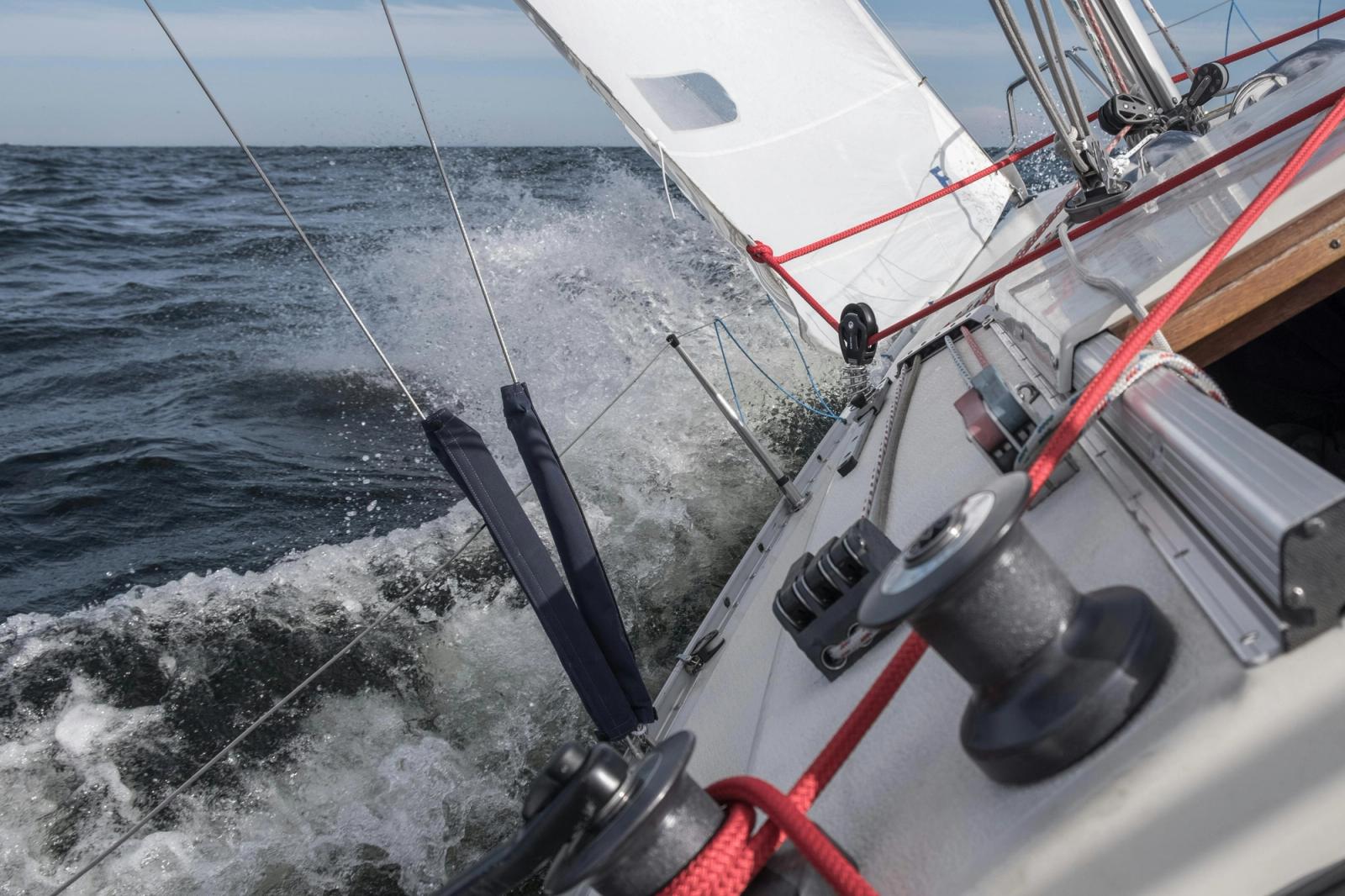
- The boat usually heels (leans) more and hits waves more directly.
But it's also one of the most satisfying parts of sailing. When you get the balance right — angle, sail trim, speed — you really feel the boat come alive.
When can't you sail?
There are a few times the answer really is "no":
- Directly into the wind, inside that no-sail zone.
- In very light wind, where there's not enough airflow over the sails.
- When obstacles (like cliffs, harbors, or narrow channels) leave no room to tack.
In those cases, you wait for better wind, change your route, or use the engine.
Final takeaway
You can't sail straight into the wind, but you absolutely can reach a destination that lies upwind. By sailing at an angle and tacking back and forth, you work with the wind instead of fighting it.
So if someone asks, "Can you sail against the wind?" — you've got the simple answer:
Yes, just not in a straight line.
Scan to download