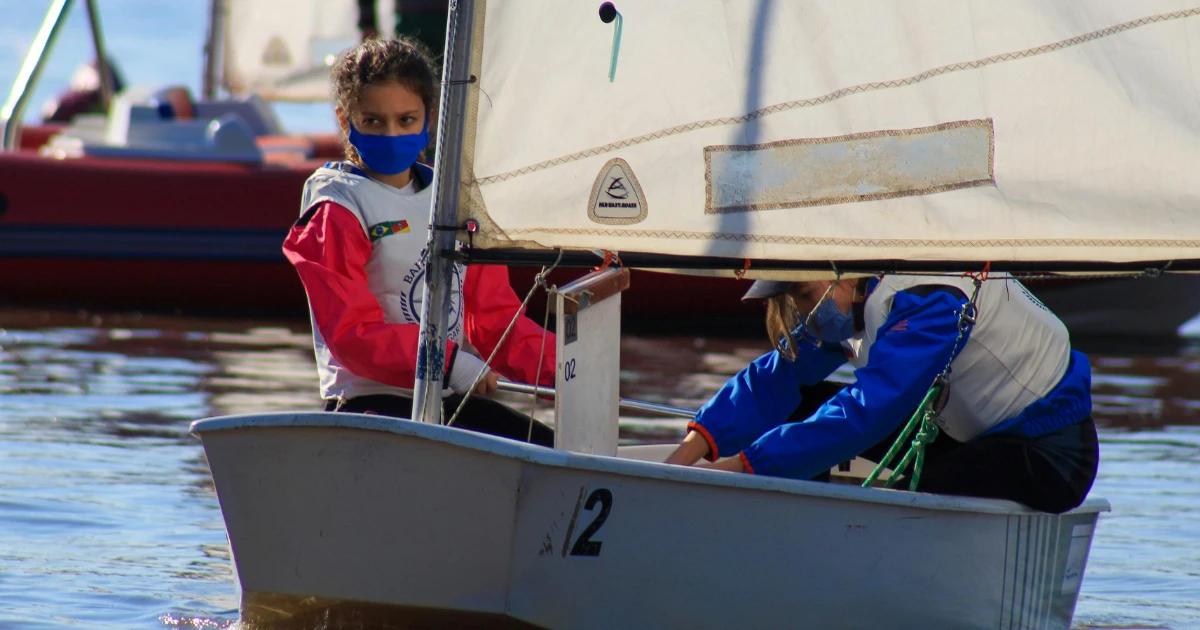
Most people don’t learn to sail by disappearing on a year-long ocean adventure.
They learn in small, structured steps, with a lot of repetition, mild frustration, and short bursts of “ohhh, now I get it.”
Here’s what that actually looks like in practice.
TL;DR
People don’t learn to sail through epic ocean crossings. They:
- Start with a short, low-commitment session.
- Take a basic dinghy/keelboat course to get core skills and safety.
- Crew regularly for more experienced skippers to see real situations.
- Do short, focused practice sessions with one clear goal each time.
- Study basic theory (navigation, rules, weather, planning) off the water.
- Slowly take more responsibility until they can plan and run simple trips safely.
1. The real beginning: a short, low-commitment taste
Most new sailors start with something small, cheap, and local:
- A 2–3 hour “try sailing” session at a club or school
- A friend taking them out for an afternoon
- A holiday resort lesson on a dinghy or beach cat
At this stage you’re not really “learning to sail” yet. You’re getting three things:
- A feel for the motion of the boat: How it heels, accelerates, and stops.
- A basic sense of fear vs. excitement: Some people hate heeling and spray; others love it.
- Motivation: You decide whether it’s worth spending money and time to go further.
People who continue usually had a clear “this is scary but fun, and I want more control” reaction.
2. First serious step: a basic course
Most structured learning starts with a short course, typically 2–5 days:
- National programs (RYA, ASA, US Sailing, etc.)
- Local yacht clubs or sailing schools
Two main tracks:
- Dinghy courses (small, responsive boats, often solo or with one crew)
- Keelboat courses (bigger, more stable boats, often 20–40 feet)
In a good beginner course you actually learn concrete skills:
- Boat setup: hoisting sails, checking rigging, basic knots (figure-eight, bowline, cleat hitch).
- Points of sail: where you can and can’t sail relative to the wind.
- Basic maneuvers: tacking, gybing, stopping the boat, and picking up a buoy.
- Safety: lifejackets, man-overboard drill, staying on the boat, avoiding collisions.
The key outcome isn’t “I’m a sailor now.” It’s:
You can move a boat around safely in moderate conditions if someone more experienced is nearby.
That’s enough to start gaining experience and not be dead weight on a boat.
3. How most skills are built: crewing for others
After the first course, people don’t magically go buy a boat and sail off. Most do this:
Join a club crew list, or try a crew finder sailing apps like SailTies now offer.
- Show up for race nights or casual sails as “extra hands.”
- Do simple tasks at first: trim a sheet, sit on the high side, watch for traffic, handle fenders.
This stage is where a lot of real learning happens:
- You see many situations: light wind, gusty days, choppy water, crowded harbors.
- You watch better sailors make decisions: when to reef, when to turn, how close to stand off hazards.
- You get used to the language on board: “ease”, “harden up”, “fall off”, “ready to tack”.
Actual progression looks like this:
- First few sails: you mostly observe, pull ropes when told.
- After ~5–10 outings: you can trim sails reasonably and move around the boat without chaos.
- After ~20–30 outings: you can helm on a reach, tack cleanly, and understand what the skipper is trying to do.
You’re still not “expert,” but you start being genuinely useful crew.
4. Deliberate practice: short sessions with clear goals
The people who improve fastest don’t just “go sailing more.”
They practice specific things on purpose:
- One afternoon focused on tacking smoothly without losing speed.
- Another focused on docking repeatedly: approach, stop, reverse, try again.
- A windy day used to practice reefing, depowering sails, and staying in control.
Typical pattern for progression:
- Duration: Lots of 2–4 hour sails, not random all-day epics. You stay fresh and focused.
- One main objective per outing: E.g., “Today I’m going to nail heaving-to and man-overboard drills.”
- Varied conditions: You don’t only sail in perfect sunshine and 10 knots of wind.
People who rely only on one weekend course and occasional casual sails plateau quickly.
People who treat it like learning any technical skill (instrument, sport, coding) progress steadily.
5. The “invisible” learning: theory, rules, and planning
From the outside, it looks like sailors just learned on the boat. In reality, the competent ones quietly put in theory time off the water:
- Basic navigation: charts, buoys, depth, bearings, tides, and currents.
- COLREGs (rules of the road): who gives way, lights and shapes, sound signals.
- Weather basics: reading forecasts, recognizing fronts and squalls, understanding local effects.
- Trip planning: plotting a short coastal passage, fuel and water planning, daylight windows, bail-out harbors.
How they actually do it:
- Short formal courses (day skipper theory, navigation classes).
- YouTube, books, and sailing forums to fill specific gaps (“how to read a tide table,” “how to anchor properly”).
- Debriefing after sails: “Why did we choose that route?” “Why did we leave at that time?”
This is what separates a “good crew” from someone who can safely take responsibility for a boat and people.
6. Common sticking points (and how people get past them)
Almost everyone hits the same obstacles:
- Fear of heeling: New sailors often feel the boat is “about to tip over” long before it’s unsafe. They get past this by:
- Sailing in gradually stronger winds with a trusted skipper.
- Practicing easing the sails and steering to reduce heel so they feel in control.
- Information overload: Too many new terms, lines, and instructions at once. People improve by:
- Focusing on one role for a while (e.g., jib trimmer) instead of trying to do everything.
- Asking for explanations after a maneuver, not during it.
- Overconfidence after first successes: Some new skippers overreach: longer trips, worse weather, under-experienced crew. The ones who last:
- Move up gradually: protected day sails → short coastal hops → simple overnight trips.
- Keep a safety margin: more wind limit, more fuel, more daylight than “absolutely necessary.”
- Lack of regular practice: Sailing twice a year won’t build solid skills. People who actually learn:
- Commit to a season (e.g., racing every Wednesday for six months).
- Or join a club where they can sail cheap and often.
7. Typical paths from beginner to competent skipper
There’s no single “correct” route, but real-world journeys often look like:
Path A: Course-heavy, structured
- Intro day → Basic dinghy or keelboat course
- Crew regularly at a club
- Day skipper / equivalent theory + practical course
- Charter small boats with friends in easy locations
- Progress to longer coastal trips, bigger boats, more complex waters
Path B: Crew-first, low cost
- Intro sail with a friend
- Regularly crew on race nights / deliveries
- Learn theory via books / online, ask skippers lots of questions
- Start taking the helm more; do informal “skipper for a day” under supervision
- Eventually buy a share in a boat or join a club’s training program
Path C: Family / partner route
- One partner is already a sailor
- Other partner learns as crew, plus a short beginner course
- They practice together on short trips, swapping roles
- Both slowly take on more responsibility so either one can handle the boat if needed
In all cases, the transition from “learner” to “real sailor” is not a certificate. It’s the moment when you can:
- Plan a short trip in familiar waters
- Check weather and tides
- Take a boat out, adjust if something changes, and bring everyone home calmly and safely
That level is very achievable for most people in a couple of seasons of consistent, focused practice.
Bottom line
People don’t actually learn to sail through big, dramatic leaps. They learn by:
- Getting a small initial taste
- Taking a short but solid beginner course
- Crewing often for more experienced skippers
- Practicing specific skills in bite-sized sessions
- Quietly putting in the theory work off the water
- Stepping up responsibility in small, deliberate increments
Do that, and you’ll look “naturally good” at sailing to everyone who never saw the boring reps.
Scan to download