


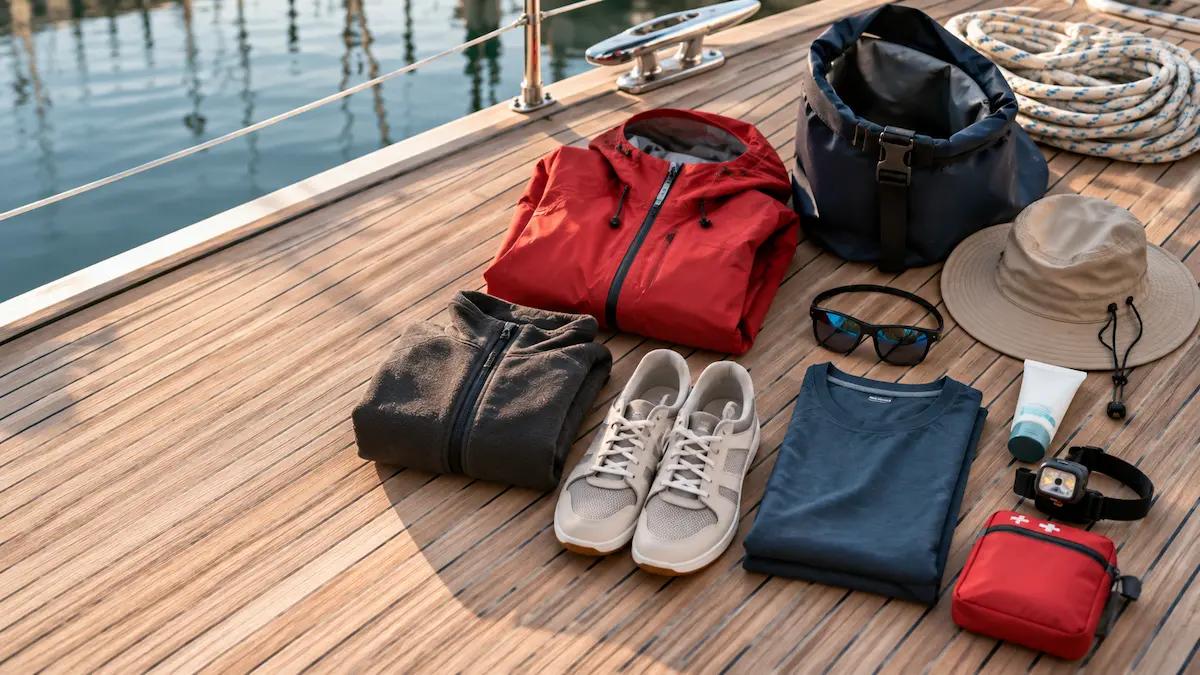
Crew on a sailing trip need less than most people expect: one soft bag, non-marking shoes, three clothing layers and solid sun protection. The skipper or charter company usually supplies the safety gear, so your job is to pack light and stay warm and dry.
This guide covers what the boat normally provides, what you bring yourself, how the list changes from a Mediterranean week to an offshore passage, and what to leave at home.
In short:
- One soft bag of 40 to 60 litres is enough for a week aboard. Hard suitcases don't fit in cabin lockers.
- Non-marking, soft-soled shoes protect the deck and grip when it gets wet.
- Three layers (base, mid and waterproof shell) handle more conditions than one thick coat.
- Sun protection means a hat with a cord, sunglasses with a retainer and reef-safe sunscreen.
- Lifejackets and harnesses are usually supplied. Check with your skipper and bring your own if you have one that fits.
- Night watches and offshore trips add a red-light headlamp, a warm hat and full foul-weather gear.
- Ask the skipper before you pack. Bedding, towels and boots vary from boat to boat.
Packed and ready? Now find the trip.
SailTies' Crew Match connects you with skippers looking for crew, so your kit list has somewhere to go.
Scan to download


What does the boat provide and what should crew bring?
Most skippered yachts and charter boats provide lifejackets, harnesses, safety equipment and a working galley. Crew bring their own clothing, footwear, toiletries and personal medication. Bedding, towels and sailing boots vary most between boats, so confirm them with the skipper before you pack.
| Item | Usually provided by the boat | Usually brought by crew |
|---|---|---|
| Lifejacket and harness | Yes, on most skippered and charter yachts | Your own, if you have one that fits well |
| Bedding | Often on charter boats, less often on private or race boats | Sleeping bag or sheets if not supplied |
| Towels | Sometimes | A quick-dry towel is a safe bet |
| Foul-weather gear | Sometimes on sailing schools and offshore trips | Your own jacket and trousers for most trips |
| Sailing boots | Rarely | Bring them for UK or offshore sailing |
| Toiletries and medication | No | Always |
Lifejackets matter more than anything else on this list. The RNLI advises wearing your lifejacket unless it is safe to take it off, including when you step off a pontoon or ride the dinghy ashore. If you own one that fits you well, bring it, because the best lifejacket is the one you will actually wear.
What shoes and clothes should sailing crew wear?
Sailing crew should wear non-marking, soft-soled deck shoes and dress in three layers: a quick-dry base layer, a fleece mid layer and a waterproof jacket. Layers let you adjust as the wind and temperature change, and on the water that happens fast.
The RYA recommends dressing in layers for exactly this reason. A merino or synthetic base layer moves sweat away from your skin. A fleece mid layer keeps you warm. A waterproof, windproof shell stops spray and rain.
Leave cotton and jeans at home. They soak up water, take hours to dry and leave you cold once the wind picks up.
For footwear, look for light-coloured soles marked non-marking. Black rubber soles scuff the deck, and smooth-soled trainers slip when it gets wet. On UK or offshore trips, add sailing boots to keep your feet dry when water comes over the deck.
Should you bring a suitcase or a dry bag on a sailboat?
Bring a soft holdall or duffel bag of around 40 to 60 litres, not a hard suitcase. A soft bag folds flat once you unpack, so it fits in a cabin locker. Add a small 10 to 20 litre dry bag for the things you want on deck or in the dinghy.
Storage on a yacht is limited and shared. Your space often comes down to a small locker or a shelf in your cabin, and an empty hard suitcase has nowhere to go.
Pack your clothes in a few small bags or packing cubes inside the holdall. If a hatch leaks or wet gear lands on your bunk, your spare layers stay dry.
How the crew packing list changes by type of trip
The core crew packing list stays the same on every trip. What changes is how much warm and waterproof gear you need, and that grows the further you go from the coast and from summer.
| Item | Day sail | Med or Caribbean week | UK coastal week | Offshore passage |
|---|---|---|---|---|
| Waterproofs | Light jacket | Light jacket | Jacket and trousers | Offshore jacket and salopettes |
| Warm layers | One fleece | One fleece for evenings | Fleece and a spare base layer | Two mid layers, warm hat and gloves |
| Footwear | Deck shoes | Deck shoes, sandals ashore | Deck shoes and sailing boots | Sailing boots and deck shoes |
| Sun protection | Hat and sunscreen | Full kit and a UV shirt | Hat and sunscreen | Full kit |
| Extras | Water bottle | Swimwear and snorkel | Headlamp | Red-light headlamp, power bank, earplugs |
Warm-water weeks like sailing cruises in Greece or Croatia sit in the middle column. Sailing cruises in the UK need the cooler, wetter kit even in July.
What to add for night watches and offshore passages
Night watches call for more warmth than you expect, plus a red-light headlamp that lets you see without ruining the night vision of the rest of the crew. Add these to the core list:
- Red-light headlamp: protects your night vision and doesn't dazzle the helm.
- Warm hat, neck gaiter and gloves: temperatures drop sharply after sunset, even in summer.
- Spare base layer in a dry bag: something dry to change into after a wet watch.
- Power bank and a short cable: charging points aboard are limited and shared.
- Earplugs and an eye mask: you will sleep at odd hours on a noisy boat.
Knowing the early signs of weather changes at sea helps too, so a squall doesn't catch you on watch without your waterproofs on.
What should you not bring on a sailing trip?
Don't bring a hard suitcase, black-soled shoes, cotton-heavy clothing or more outfits than you will wear. Glass bottles, hair dryers and other high-power appliances are also best left at home, because space is tight and most boats run on limited battery power.
A useful rule: if you wouldn't carry it on a week of camping, it probably doesn't belong on a yacht either.
Crew packing checklist
This checklist covers the five things every crew member needs, whatever the trip. Screenshot it or print it before you pack, and check the details with your skipper.
| Category | What to bring |
|---|---|
| Footwear | Non-marking, soft-soled deck shoes or sailing boots |
| Clothing | Base layer, fleece mid layer and waterproof jacket, even in summer |
| Storage | Soft 40 to 60 litre holdall plus a small dry bag |
| Sun protection | Hat with a cord, sunglasses with a retainer, reef-safe sunscreen |
| Personal | Medication, seasickness remedy, basic first aid |
Sun protection is the item crew underpack most often, and it can't be fixed a few hours offshore. Choose a reef-safe sunscreen without oxybenzone, a UV filter that NOAA-funded research identified as a hazard to coral reefs.
Pack a seasickness remedy even if you have never been seasick. Most remedies work best when taken before symptoms start, so take it before you leave the dock. A pharmacist can recommend the right treatment for you.
Log every trip once you're out there.
Download SailTies for free and keep a real record of the trips you crew on.
Scan to download
Conclusion
Packing as crew comes down to a few decisions made well. Bring one soft 40 to 60 litre bag, non-marking shoes and three layers that cope with spray, wind and cold evenings. Add proper sun protection and your own medication, and ask the skipper what the boat supplies before you buy anything new. For night watches or offshore passages, scale up the warm and waterproof gear and add a red-light headlamp.
Packing well is one part of being good crew. What First-Time Sailors Should Know Before Their First Trip covers life aboard, and How to Join a Sailing Crew With No Experience explains how to land your first berth. How to Find Sailing Crew shows what gets you chosen, and SailTies' Crew Match connects you with skippers looking for crew.
Frequently Asked Questions
Can you bring a suitcase on a sailboat?
You can bring a suitcase on a sailboat, but a hard one is a poor choice. It won't fold away once empty, and most cabin lockers are too small to hold it. A soft holdall of 40 to 60 litres is the standard choice for crew.
Do I need my own life jacket for a sailing trip?
You usually don't need your own life jacket, because most skippered and charter yachts supply one for every crew member. If you already own one that fits well, bring it, and check with the skipper either way. Wear it whenever the skipper asks and whenever you move between boat, pontoon and dinghy.
What do you wear on a sailboat at night?
On a sailboat at night, wear more layers than during the day: a base layer, a warm mid layer, waterproofs, a warm hat and gloves. Temperatures drop after sunset and spray feels colder. A red-light headlamp and your lifejacket complete the kit.
Can you wear trainers on a sailboat?
Trainers are fine on a sailboat only if they have non-marking, light-coloured soles with good grip. Black soles scuff the deck and smooth soles slip when wet, so deck shoes or sailing boots are the safer choice.
What should you not bring on a sailing trip?
On a sailing trip, leave behind hard suitcases, black-soled shoes, jeans and other cotton-heavy clothes, glass bottles and high-power appliances like hair dryers. Space and battery power are limited aboard, so every item should earn its place.