


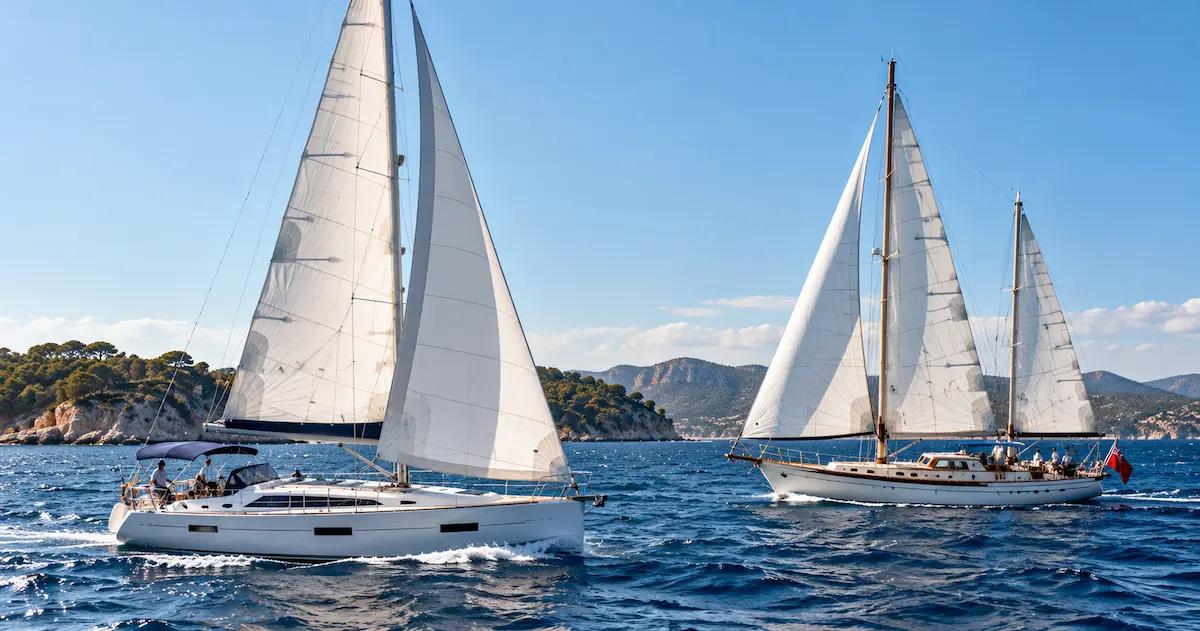
A sloop rig suits most cruisers better than a ketch, mainly because it's simpler to handle with a small crew and points higher upwind, but a ketch earns its keep on larger boats and heavy-weather passages, where splitting sail area across two masts makes reefing down to a manageable sail plan easier.
Neither rig is objectively "better," the sloop wins on simplicity and short-handed ease, while the ketch wins on sail-plan flexibility and balance once a boat gets big enough that a single mainsail becomes unwieldy.
In short:
- A sloop is simpler to sail short-handed, with only two sails to manage instead of three
- A sloop points higher into the wind, which matters for anyone sailing upwind regularly
- A ketch splits sail area across two masts, which can make reducing sail in heavy weather more manageable on larger boats
- A ketch often balances the helm more easily by adjusting the mizzen rather than reefing the main
- Most sailors under about 45 feet do better with a sloop; larger, heavier cruising boats are where a ketch starts to make more sense
Whichever rig wins for you, log the passage either way.
SailTies tracks your trips the same way regardless of rig, so switching boats never means starting your logbook over.
Scan to download


Where the Sloop Wins
A sloop's two-sail plan is easier to tack, reef, and trim with one or two people aboard, and it points higher into the wind than a ketch, both of which matter more to the average cruiser than a ketch's extra flexibility.
Fewer sails and less rigging also mean lower maintenance costs and fewer parts to source, which is part of why the sloop remains the default rig on almost all production cruising boats today.
That lower cost profile is part of the same picture covered in Cost to Own a Sailboat in 2026.
Where the Ketch Wins
A ketch splits total sail area across a mainsail and a smaller mizzen, which makes it easier to reduce sail in building wind on a larger boat, dropping the main and sailing on the mizzen and headsail alone rather than wrestling one oversized mainsail down.
Adjusting the mizzen can also balance the helm without touching the main, which some offshore cruisers on bigger, heavier boats find genuinely useful on long passages with a shorthanded watch system.
Sloop vs Ketch
| Factor | Sloop | Ketch |
|---|---|---|
| Sails to manage | 2 | 3 |
| Upwind pointing | Better | Fair |
| Heavy-weather sail reduction | Reef the main | Drop the main, sail on mizzen + headsail |
| Helm balance adjustment | Limited without reefing | Adjustable via the mizzen |
| Typical boat size | Under ~45 feet | Larger, heavier cruising boats |
| Maintenance | Lower | Higher, more rigging and sails |
Why Most Cruisers Still Choose the Sloop
The reasons almost every production cruising boat ships with a sloop rig, covered in Why Almost Every Cruising Sailboat Uses a Sloop Rig, come down to the same simplicity that wins this comparison for most sailors under about 45 feet.
Boat size, in turn, connects closely to how the boat actually gets sailed day to day, which Catamaran vs Monohull: How Usage Patterns Actually Differ covers from the hull-type side of that same decision.
Simplify your rig decision, not your record-keeping.
Download SailTies for free and keep one consistent logbook, whatever rig you end up choosing.
Scan to download
Conclusion
A sloop suits most cruisers better thanks to its simplicity and upwind pointing, while a ketch earns its place on larger, heavier boats where splitting sail area across two masts makes heavy-weather sail handling and helm balance easier. The right choice depends more on boat size and crew than on either rig being universally better.
Frequently Asked Questions
Is a sloop or a ketch better for cruising?
A sloop is generally better for cruising on boats under about 45 feet thanks to its simplicity and upwind pointing, while a ketch becomes more appealing on larger, heavier boats where splitting sail area eases heavy-weather handling.
Why do ketches have two masts?
A ketch has a mainmast and a smaller mizzen mast aft of it, which splits the total sail area into more, smaller sails that are each easier to manage individually, particularly on larger boats.
Does a ketch sail better upwind than a sloop?
No, a sloop generally points higher into the wind than a ketch, since dividing sail area across two masts on a ketch sacrifices some upwind efficiency in exchange for other advantages.
What size boat suits a ketch rig best?
Ketch rigs tend to make the most sense on larger, heavier cruising boats, roughly above 45 feet, where a single mainsail would otherwise become unwieldy to handle short-handed.
Is a ketch more expensive to maintain than a sloop?
Yes, a ketch typically costs more to maintain than a sloop, since it has an extra mast, extra rigging, and an additional sail to inspect, service, and eventually replace.