


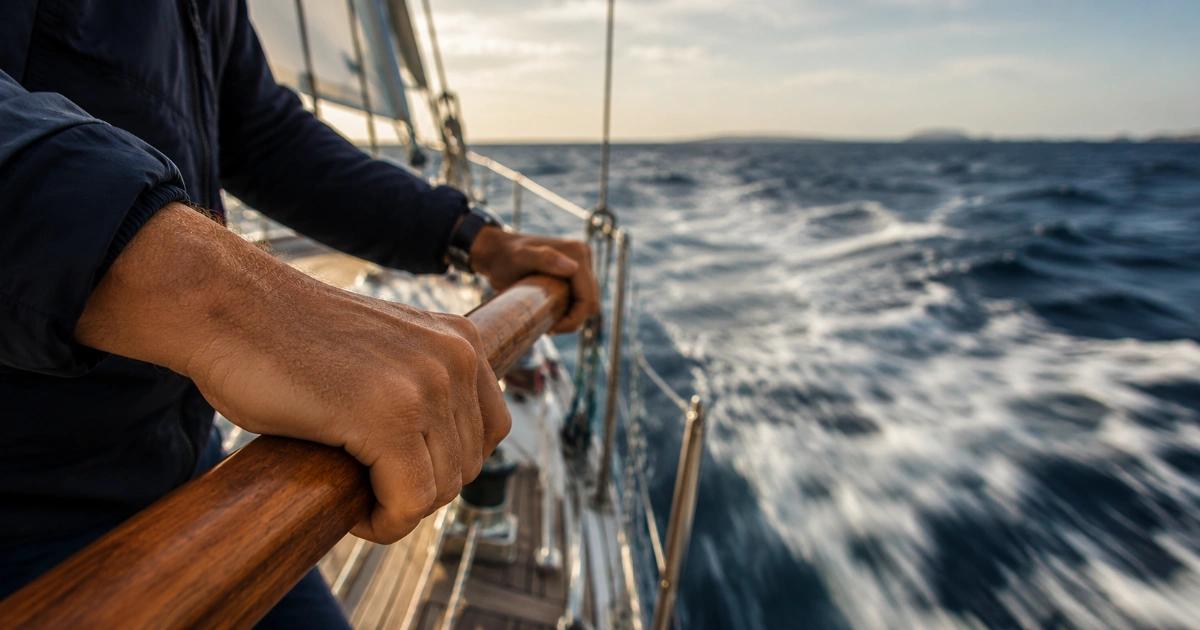
Most people assume steering a boat works like steering a car. You turn the wheel in the direction you want to go, the boat follows, and that's it.
After a few hours at the helm, you realise how to steer a boat is a more interesting question than that. The boat is responding to the wind, the sails, the waves, your weight, and the rudder all at once. A good helmsman is managing all of it, often without thinking about any of it consciously.
This article breaks down how steering actually works on a sailboat: the mechanics, the feel, what experienced sailors do differently from beginners, and what builds real steering ability over time.
In short:
- Steering a boat is not just about turning a wheel or pushing a tiller: it involves reading the wind, balancing the sails, and making constant small adjustments
- Tiller and wheel are the two steering systems you'll encounter: they feel completely different and behave opposite to each other
- The rudder is only one of three tools for steering: sails and body weight also control where the boat goes
- Weather helm and lee helm describe the natural pull a boat exerts on the helm, and every sailor feels this on every trip
- The biggest insight from sailing logs is that good helmsmen use the rudder as little as possible
- Steering feels awkward at first and instinctive after hours of practice: the transition happens faster than most beginners expect
How does steering a boat actually work?
Steering a sailboat means controlling the rudder to change the boat's direction. The rudder is a blade mounted under the water at the stern. When it deflects, it redirects the flow of water passing beneath the hull, which pushes the stern sideways and turns the bow in the opposite direction.
The rudder is controlled by either a tiller or a wheel. A tiller is a horizontal bar connected directly to the rudder stock. A wheel operates through a system of cables, pulleys, and a quadrant attached to the rudder.
One key point that catches every beginner off guard: the rudder functions partly as a brake.
As soon as you turn it more than a small amount, water flow separates from the blade and the rudder stalls, which slows the boat. This is why experienced sailors use the minimum rudder input needed to hold a course, and why good steering looks almost effortless from a distance.
Tiller vs. wheel: which one will you use?
Whether you steer with a tiller or a wheel depends on the size and design of the boat. Understanding both systems is part of learning how a sailboat works.
Tiller steering connects directly to the rudder with no mechanical intermediary. Push the tiller to port and the boat turns to starboard. Push it to starboard and the boat turns to port.
This is the opposite of what most beginners expect, and it takes a short while to override the instinct. The payoff is direct, unfiltered feedback: you feel the pressure of the water on the rudder through your hand, which makes it easier to sense how the boat is balanced and whether the sails need adjustment. Most sailing instructors prefer tillers for teaching because that feedback accelerates learning.
Wheel steering works like a car: turn right to go right. It operates through cables and pulleys, which adds mechanical advantage but reduces feedback.
On a wheel, the nuances of rudder pressure are filtered out, so you rely more on visual cues like telltales and the compass than on feel. Wheels are standard on larger cruising boats where the forces on the rudder would make a tiller impractical to hold for extended periods.
Neither is better in absolute terms. Most sailors who have used both agree that the tiller develops steering skills faster, while the wheel is more practical for long passages on big boats.
Why the rudder is not the only way to steer
This is what surprises most beginners and what logs reveal about how skilled sailors actually work.
There are three ways to turn a sailboat: the rudder, the sails, and heel (the angle of the boat). A good helmsman uses all three together. A beginner tends to rely entirely on the rudder, which is slower, creates more drag, and masks what the boat is actually doing.
Sails steer the boat. The balance between the mainsail and the headsail determines where the boat naturally wants to go. Easing the mainsail and sheeting in the jib pushes the bow downwind. Trimming the mainsail and easing the jib pulls the bow upwind. Experienced sailors use sail trim to pre-steer through maneuvers, so the rudder only needs to make fine corrections. Understanding tacking and jibing becomes much clearer once you see how sail balance drives those turns.
Heel steers the boat. When a boat heels to leeward, it tends to turn upwind. Flatten the boat and it tracks straighter. This is why weight placement matters at the helm: crew sitting to windward counteracts heel and reduces the amount of rudder correction needed.
The practical takeaway: if you're constantly working the tiller or wheel to hold a course, the boat is not properly balanced. The fix is usually in the sails, not in steering harder.
What is weather helm, and why does every sailor feel it?
Weather helm is the tendency of a sailboat to turn toward the wind on its own. You feel it as pressure in the tiller or wheel pulling in one direction. To hold a straight course, you apply a constant counteracting correction.
A slight weather helm of around 3 to 5 degrees is considered desirable. It gives the helmsman something to feel, makes the rudder work more efficiently by generating a small amount of lift, and provides a built-in safety feature: if the helm is released, the boat rounds up into the wind and slows down rather than accelerating into a dangerous situation.
Too much weather helm, though, becomes exhausting. It means the rudder is being held off-center continuously, which adds drag and slows the boat. It usually indicates the boat is overpowered, heeling too much, or that the mainsail is carrying too much load relative to the headsail.
Lee helm, the opposite tendency where the boat wants to turn away from the wind, is considered dangerous. A boat with lee helm will bear away and accelerate toward an uncontrolled jibe if the helm is released. Designers work to avoid it, and if you encounter it, the cause is usually a sail plan that is too heavily loaded forward.
What sailing logs consistently show is that beginners are surprised by weather helm on their first few trips. It feels like the boat is fighting them. After a few sessions, they start to recognise it as information: the helm pressure tells them when the boat is overpowered, when it needs to be reefed, and when the sail trim is off.
What beginners actually experience at the helm
The first time most people steer a sailboat, two things happen. They overcorrect constantly, turning the tiller or wheel too much and sending the boat snaking across the water. And they stare at the bow, trying to hold a heading by watching where the boat is pointing rather than feeling how it's moving.
Skilled instructors describe a shift that happens after several sessions: the helmsman stops thinking about steering and starts responding automatically. The information from the helm, the sails, and the feel of the boat bypasses conscious thought and goes directly to the hand. It is exactly the same process as learning to balance a bicycle.
The practical steps that get you there faster:
Use a fixed reference point. Pick a landmark or a point on the horizon and steer toward it rather than watching the compass. This reduces overcorrection.
Reduce your inputs. Make smaller adjustments and wait for the boat to respond before correcting again. Sailboats have momentum: they don't respond instantly.
Let the sails tell you what's happening. Watch the telltales on the headsail. If they're streaming evenly on both sides, the sail is trimmed correctly. If the windward telltale lifts, you're pointing too high. If the leeward telltale stalls, you're falling off. The sails give you more steering information than the compass does.
Log your time at the helm. Every hour matters. Tracking time on the water is something every sailor's logbook should capture, not just because charter companies ask for it, but because it gives you an accurate picture of where you are in your development.
Sailties' digital logbook makes it easy to record every hour at the helm from your phone.
Scan to download


How steering changes with the points of sail
How you steer a boat is not the same on every point of sail. The feel of the helm, the amount of correction needed, and the risks involved all shift depending on your angle to the wind.
| Points of sail | Helm feel | Correction frequency | Main risk |
|---|---|---|---|
| Upwind (close-hauled) | Heavy, pronounced weather helm | Constant small corrections | Pinching too high, sails luff |
| Reaching | Light, neutral | Infrequent | Very low, most forgiving |
| Downwind (running) | Light, reduced weather helm | Moderate, wave-driven | Accidental jibe |
Upwind (close-hauled): The boat is sheeted in tight and moving through the water at its best pointing angle. Weather helm is most pronounced here. You're steering a narrow groove: pinch too high and the sails luff and the boat slows; fall off too far and you lose ground to windward. Small, continuous corrections are the norm. Understanding windward vs. leeward is especially useful when sailing upwind.
Reaching: The boat is fastest and most forgiving. Sails are eased, the helm is lighter, and corrections are infrequent. Most beginners find reaching the most comfortable point of sail to practice steering on.
Downwind (running): The boat can feel unstable as waves push the stern. Weather helm decreases and the risk of an accidental jibe increases. Steering requires more attention to wave action and wind shifts. Best wind for beginners covers the wind ranges where each point of sail is most manageable for new helmsmen.
Conclusion
Learning how to steer a boat is less about mechanics and more about developing feel. The mechanics are simple: rudder, tiller or wheel, basic inputs. But real steering involves reading weather helm, balancing the sails, minimising rudder use, and building the automatic responses that only come from time at the helm.
What logs reveal is consistent: sailors who progress fastest are those who log the most helm time in varied conditions, who pay attention to what the boat is telling them through the tiller or wheel, and who learn early that less rudder input almost always produces better results.
Ready to track your progress? The Sailties app lets you log helm time, passages, and conditions directly from the water, so every session counts toward your sailing record.
Scan to download
If you're building your foundation, explore Sailties' guide to getting started in sailing and our breakdown of sailing basics to connect steering skills to the wider picture of seamanship.
Frequently Asked Questions
How do you steer a boat with a tiller?
Push the tiller in the opposite direction to where you want to go: push it to port (left) and the bow turns to starboard (right), and vice versa. This counterintuitive response catches most beginners off guard. The tiller connects directly to the rudder, so the feedback is immediate. Small, smooth inputs work better than large corrections: move the tiller gradually, wait for the boat to respond, then centre it again to hold the new course.
What is the difference between steering with a tiller and a wheel?
A tiller gives direct, unfiltered feel from the rudder, making it easier to sense how the boat is balanced. It steers in the opposite direction to the intended turn. A wheel steers like a car (right to go right) and uses cables and pulleys to connect to the rudder, which reduces feedback but requires less physical effort, especially on larger boats. Both steer the same rudder: the feel and ergonomics are the main differences.
What is weather helm and how does it affect steering?
Weather helm is the natural tendency of a sailboat to turn toward the wind, felt as pressure in the tiller or wheel. A slight weather helm of around 3 to 5 degrees is normal and desirable: it gives the helmsman feedback and improves rudder efficiency. Too much weather helm, usually caused by excessive heel or an overpowered mainsail, creates drag and fatigue. Easing the mainsail or reefing reduces it.
Why does steering feel so hard for beginners?
Most beginners overcorrect, turning the tiller or wheel too much and creating a zigzag course. They also tend to steer by watching the bow rather than feeling the boat. The solution is to make smaller inputs, use a fixed landmark as a reference point, and watch the telltales on the headsail for steering information. The awkward phase passes quickly: most sailors find that steering becomes automatic after five to ten hours of helm time.
Can you steer a sailboat without using the rudder?
Yes. Sail trim and body weight both steer the boat. Trimming the mainsail and easing the jib causes the bow to head up toward the wind. Easing the main and sheeting in the jib causes the bow to fall off downwind. Heeling the boat to leeward also makes it head up. Experienced sailors use these tools constantly to pre-steer through maneuvers and reduce the amount of rudder correction needed. If the rudder fails entirely, a two-sail boat can still be steered to safety using sheets alone.
Try SailTies now!
Scan to download